












 Ski boots – an investment[/caption]

 When to buy your own ski and boots[/caption]
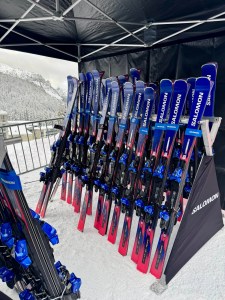 When to buy skis[/caption]
 When to buy your own ski boots and skis[/caption]

-
How to Stay Warm Skiing (Even When It’s Really Cold)

Making sure you’re ready for the conditions -> you’ll enjoy the ski day a lot more! January often brings the best skiing conditions of the season — quieter slopes, colder snow and crystal-clear days. But when temperatures really drop, staying warm skiing can quickly become the biggest challenge.
Knowing how to stay warm on the slopes in a cold snap isn’t about adding endless layers. It’s about managing circulation, sweat and timing — the small adjustments experienced skiers make without thinking.
If you’re skiing in January or heading out during a deep cold spell, follow these smart tips. They will help you stay warm and comfortable. You will make the most of every run.
1. Warm Your Body Before You Go Outside
Most skiers step straight from a warm chalet into the cold and expect their body to cope. The problem?
Your muscles and circulation haven’t “woken up” yet.What to do:
-
Do a 5–7 minute warm-up indoors (air squats, leg swings, ankle rolls, gentle hops).
-
This primes circulation so warm blood reaches fingers and toes sooner
-
You’ll feel warmer on the first lift instead of freezing for 30 minutes.
Here’s a 5 minute warm up routine to do before you go outside.
2. Don’t Over-Layer — It Can Make You Colder
This surprises people.
Too many layers can:
- Restrict blood flow
- Trap sweat
- Cause chilling once you stop moving
Rule of thumb:
- Base layer: warm and breathable
- Mid-layer(s): insulation, not bulk
- Outer layer: windproof and waterproof
If you feel slightly cool standing still, you’re probably dressed perfectly for skiing. Check out our post on what to pack for your ski holiday.
3. Protect Your Extremities First
Your body sacrifices hands, feet, ears, and face to keep your core warm.
High-impact upgrades:
- Mittens instead of gloves (huge difference)
- Thin liner socks + proper ski socks (never double socks)
- Neck tube or balaclava that seals the gap between helmet and jacket
- A helmet liner or thin hat on very cold days
Cold hands and feet usually mean poor circulation, not lack of insulation.
4. Manage Sweat Like a Pro
Sweat is the enemy in cold conditions.
If you sweat on the first run, you’ll freeze on the lift.
Simple fixes:
- Unzip slightly on warmer runs
- Remove a layer at lunch if needed
- Avoid cotton anywhere near your skin
Dry = warm. Always.
5. Fuel and Hydration Matter More Than You Think
Your body generates heat by burning fuel.
Cold-day essentials:
- Eat a proper breakfast with carbs and fats
- Snack regularly (nuts, bars, chocolate all help)
- Drink water — dehydration reduces circulation
Many people feel cold simply because they’re under-fueled.
6. Keep Moving — But Smartly
Standing still in the cold is when heat loss spikes.
Experienced skiers:
- Keep moving in lift queues
- Make small leg movements on chairlifts
- Avoid long static stops unless sheltered
Motion = circulation = warmth.
7. Take Advantage of Mountain Timing
Cold air pools in valleys early and late in the day.
On very cold days:
- Start mid-morning, not first lift
- Ski sunny aspects when possible
- Take longer indoor breaks and shorter outdoor ones
There’s no prize for suffering — smart timing makes a huge difference.
8. Accept That Some Days Are Shorter — and That’s OK
Even the best-equipped skiers sometimes call it early.
If you’re warm, you ski better.
If you ski better, you enjoy it more.That’s the goal.
Cold Weather Skiing FAQ’s
Why do I feel colder on ski lifts than when skiing?Because your body stops generating heat when you’re sitting still. Wind exposure and reduced circulation on chairlifts cause heat loss quickly, especially in hands, feet and face. Keeping your core warm, blocking wind and making small leg movements can significantly reduce the cold.
Is it better to wear more layers when skiing in very cold weatherNot always. Over-layering can restrict circulation and trap sweat, which actually makes you colder when you stop moving. A breathable base layer, effective insulation and a windproof outer shell are more effective than bulky layering.
Why do my hands and feet get cold first?Your body prioritizes keeping your core warm, reducing blood flow to extremities in cold conditions. Cold hands and feet are usually a circulation issue rather than lack of insulation. Mittens, proper socks and staying fueled help more than adding extra layers.
What should I eat to stay warm skiing in cold temperatures?Carbohydrates and fats help your body generate heat. A proper breakfast, regular snacks and staying hydrated all support circulation and warmth throughout the day — especially in January’s colder conditions.
Is January skiing colder than other months?January often feels colder because temperatures are lower and the air is drier, but it also brings quieter slopes and better snow quality. With the right preparation, January can be one of the most enjoyable times to ski.
Planning a January ski trip? Explore quieter resorts and well-located chalets ideal for cold-weather skiing on Chalets Direct.
Final Thought
Staying warm on the slopes isn’t about brute force layering — it’s about preparation, circulation, and awareness. The skiers who look relaxed on freezing days aren’t tougher — they’re just smarter.
And when the conditions are cold but perfect?
That’s often when the mountains are at their best. -
-
Find Your Perfect Ski Holiday with the Chalets Direct Solutions Room
Back in 1999, Chalets Direct launched something that would change how people find ski holidays: the Solutions Room.
Since then The Solutions Room has been used by tens of thousands of ski holidaymakers, and over 800,000 solutions have been posted. The Solutions Room works alongside Chalets Direct’s chalet and apartment listings, giving you another way to find ski holiday accommodation across the Alps when availability is limited or plans are flexible..
The Chalets Direct Solutions Room helps skiers and snowboarders find the right ski holiday accommodation without endless searching. Whether you’re looking for a catered chalet, a self-catered apartment, or flexible ski holiday options across the Alps, the Solutions Room connects you directly with operators who still have availability.
What is the Chalets Direct Solutions Room for ski holidays?
Think of it as a holiday matchmaking service.
You post what you’re looking for – dates, resort ideas, group size, budget, catered or self-catered – and the right chalet and apartment owners come back to you with offers that actually fit.
If you’re unsure on the details, that’s fine too. The Solutions Room is perfect for sounding things out and seeing what options exist before you commit.
So you can be specific – “I need a catered chalet space for two for next week, close to Geneva” – or open to ideas – “what’s available for 6 in January”?
How the Solutions Room matches you with ski chalets and apartments
Behind the scenes, there’s a lot going on.
Your request is instantly matched with Chalets Direct members who meet your criteria and still have availability.
So:-
Looking for a catered chalet in Morzine at Christmas? Only relevant operators are notified.
-
Flexible on dates and destination in January? Multiple suitable providers are alerted.
-
Organising a large group trip, a luxury apartment, or a last-minute escape? The system works just as well.
No trawling listings. No guesswork. Just targeted responses from people who can actually help.
Why the Solutions Room is different from traditional ski holiday searches
Most holiday searches put the work on you.
The Solutions Room flips that around.You explain what you want once, and the industry comes to you. It’s efficient, flexible, and especially useful if:
-
You’re short on time
-
You’re organising a group
-
You’ve left it late
-
You don’t yet know where to start
Why not try the Solutions Room to find your next ski holiday?
With the ski season now fully underway, conditions across the Alps are developing fast. Fresh snowfall is forecast for the south-western Alps this week, while colder temperatures are setting in later this week across the north-western Alps and the Dolomites, helping preserve existing snow and improve piste conditions. Whether you’re planning a last-minute ski break or looking ahead to the coming weeks, now is a great time to explore what’s available.
The Solutions Room has already helped thousands of skiers find the right holiday.
There’s a very good chance it can help you too.
-
-
What and How to Pack for a Ski Holiday: Your Complete Guide

Looking good on the slopes is part of the fun! Packing for a ski holiday can feel like organising a mini-expedition. Bulky kit, unpredictable weather, and the constant “have I forgotten something?” nag can turn the build-up to your trip into a small headache. But with the right plan — and a smart checklist — it’s easy to arrive in resort fully prepared and ready to enjoy the mountains.
Whether you’re heading to a cosy self-catered chalet or a luxury catered stay, here’s your complete guide to what to pack and how to pack it efficiently.
1. Start With the Essentials: Clothing You Actually Need
Ski clothing is your biggest space-taker, so focus on layers that keep you warm, dry, and comfortable.
Base Layers
- Thermal tops and leggings (merino or technical synthetic)
- Sports underwear
- Ski socks
Mid Layers
- Lightweight fleece or microfleece
- Thin down or synthetic puffer (ideal for colder days) – and can double up for evening too.
Outer Layers
- Waterproof, breathable ski jacket
- Waterproof ski trousers/salopettes
- Gloves or mittens (plus glove liners if you run cold)
- Neck warmer or buff
- Helmet (you can rent if preferred)
- Hat/beanie for resort time
- Goggles (with lenses suited for sun and snow)
- Sunglasses for sunny terrace lunches
2. Ski Gear: Bring It or Rent It?
Most travellers do a mix. Bringing your own boots is the biggest comfort boost; skis and poles are easy to rent in-resort.
Pack if You Have Them:
- Ski boots (use a boot bag; fill the space with socks or gloves)
- Skis and poles (if you love your own kit)
- Helmet (optional to bring; easy to rent)
Rent to Save Space:
- Skis, poles, helmet
- Snowboard and boots
- Avalanche gear (if heading off-piste with a guide)
3. Don’t Forget the Small but Vital Items
These often get missed — and can be annoying or expensive to replace in resort.
- Sun cream (high SPF) & lip balm
- Phone power bank
- Small backpack for the slopes
- Reusable water bottle
- Mini first-aid kit
- Painkillers, blister plasters
- Travel adaptor
- Slippers or comfy indoor shoes for chalets
- Swimwear (for spas or chalet hot tubs)
4. Après & Chalet Clothing
You don’t need much — resorts are casual.
- Jeans or warm trousers
- Jumpers/fleeces/long-sleeve t-shirts
- Cosy socks
- Casual boots or snow boots (grippy soles are a must)
- Outfit for a nice dinner out (optional)
5. Toiletries & Personal Care
Cold, dry air = keep your skin happy.
- Moisturiser
- Lip balm
- Contact lenses & solution
- Medications
- Check ahead to see if accommodation supplies shower gel/shampoo/conditioner etc
6. How to Pack Efficiently (So Everything Actually Fits)
Packing for a ski holiday doesn’t have to mean sitting on your suitcase to zip it shut.
Top Space-Saving Tips
- Roll, don’t fold, your base and mid-layers.
- Use compression packing cubes for bulky items.
- Wear your ski jacket and bigger boots for travel.
- Put gloves, socks, buffs, and thermals inside your ski boots.
- If travelling with others, share larger items like toiletries.
7. Smart Travel Documents & Logistics
A seamless arrival makes the whole holiday feel smoother.
- Lift pass (if pre-purchased)
- Chalet or accommodation instructions
- Transfer details
- Travel insurance with winter sports cover
- Driving essentials (if self-driving: chains, breakdown cover)
8. A Ready-Made Ski Holiday Packing Checklist
Copy, print, or save this to your phone before you go.
Clothing
- Thermal layers
- Fleece
- Ski jacket & trousers
- Ski Gloves/mittens
- Buff
- Socks (2–3)
- Snow boots
- Casual outfits
- Beanie/Hat for resort
- Swimwear
Gear
- Boots
- Goggles and sunglasses
- Helmet
- Backpack
- Water bottle
Toiletries & Health
- SPF
- Lip balm
- Moisturiser
- First aid
- Medications
Documents
- Passport/ID
- Ski pass
- Accommodation info
- Insurance
- Transfer/driving details
Other Essentials
- Phone charger
- Travel plug
Final Tip: Plan Ahead & Travel Light(er)
Early planning saves money (especially on ski hire and lift passes), avoids luggage stress, and lets you focus on the fun part — fresh snow, mountain views, and that first glide down the piste.

-
First Day Back On Skis – Top Tips
Your First Day Back on Skis: Top Tips to get it right
The first day of your ski holiday sets the tone for the whole week — yet it’s the day so many people get wrong. After months or even a full year off snow, it’s natural to be excited, but excitement often leads to rushing, fatigue, poor technique … and injuries that were completely avoidable.
Getting your first day right is simple. Think of it as recalibration — waking up dormant skills, reactivating your muscles and nervous system, and reminding your body how to move on snow.
Here’s exactly what to do to make sure your first day is safe, fun and sets you up for the best possible week.
1. Accept that you haven’t skied for a while — and that’s OK
Most holidaymakers ski 5–10 days per year. That means:
-
Your technical timing won’t be sharp
-
Your legs won’t be ski-fit
-
Your stance may feel odd
-
Your balance reactions will be slower than you expect
This is completely normal. In fact, even elite skiers take a few runs to “feel the snow”. Your goal on Day 1 isn’t to prove anything — it’s to wake up the system.
Another thing to bear in mind is that it’s normal to experience first day, or even first week, nerves. Don’t beat yourself up if your confidence is not where you’d like it to be. (Check out our ski confidence tips blog to help out)
2. Start with a short warm-up before you even click into your skis
A good warm-up wakes up both:
Your muscles
- Glutes
- Quads
- Hamstrings
- Core
AND your central nervous system (CNS)
This is what controls balance, coordination, edge control and reaction speed.
A great pre-ski warm-up takes just 5 minutes:
- 20 bodyweight squats
- 10–15 reverse lunges each side
- 20 seconds of small hops
- 10 seconds of lateral shuffles
- 10 seconds of quick feet
- 3–4 deep breaths to relax the upper body
Your muscles feel warmer — but more importantly, your nervous system wakes up, meaning your skiing will feel smoother from the first run.
Here’s a quick warm-up to do in your bedroom!
3. Begin on an easy slope — even if you’re experienced
This isn’t about “beginner runs”. It’s about allowing your body to re-sync. The best World Cup skiers always do this without exception.
Start on a gentle blue or a friendly green and focus on:
-
Slow linked turns
-
Feeling the edges
-
Re-finding your natural stance
-
Balance over the outside ski
-
Smooth weight transfer
After 2–3 runs, you’ll feel everything coming back.
4. Focus on good technique early
Many holidaymakers fall into the trap of skiing too fast early in the day, using brute strength instead of technique — this is what causes leg burn, frustration, and injuries.
Instead, spend the first 60–90 minutes on:
✔ Feeling your balance through the soles of your feet
✔ Smooth turn shape
✔ Feeling the snow under both skis
✔ Re-finding your rhythm
✔ Finishing turns cleanly and controlling your speed
✔ Skiing without tension
These early cues will make the rest of the week better.
5. Take a break earlier than you want to
Your legs will feel fresh but your stabilising muscles and CNS fatigue much faster on Day 1 than you think.
Stop for a drink, a snack or a coffee after 60–90 minutes, not three hours.
A short break will:
-
Reset your balance
-
Prevent sloppy technique
-
Keep you fresh for the afternoon
-
Reduce the risk of falls
-
Keep your holiday enjoyable rather than exhausting
6. Build up your terrain gradually
Think of the day in three phases:
Phase 1 — Reboot (gentle blues)
Find your stance, balance and rhythm.
Phase 2 — Rebuild (normal blues / easy reds)
Increase speed and turn shape once things feel natural.
Phase 3 — Ride (reds / challenging terrain)
Only progress when you feel clean, confident and in control.
This progression ensures you feel great instead of fighting your skis by 3pm.
7. Don’t chase miles — chase quality
Holidaymakers often treat Day 1 like a marathon: “Let’s do as many runs as possible!”
But your skiing improves far more if you:
-
Ski fewer runs with better technique
-
Stop when you’re tired
-
Keep turns clean instead of messy
-
Finish the day feeling good, not wrecked
Your best skiing usually happens on Days 2 to 4, and the quality of Day 1 dictates how good those days will be.
8. Finish earlier than usual
End the day while you still feel fresh. This protects you from:
-
Falls
-
Twisted knees
-
Fatigue-based injuries
-
Poor technique habits
Going back to the chalet with energy and confidence sets up your whole week.
9. Optional but highly recommended: Book a one-hour refresher lesson
Even experienced skiers benefit enormously from 60 minutes with a top instructor on Day 1.
It helps with:
-
Technique reminders
-
Balance cues
-
Turn shape correction
-
Bad habits reset
-
Confidence boost
It makes a massive difference, especially if you ski only once or twice a year.
10. Enjoy the feeling of being back
The first day is about:
-
rediscovering the snow
-
re-finding your rhythm
-
reawakening skills you’ve built over years
-
enjoying the mountains
-
easing your body back into movement
Don’t rush the day. Let the skiing come back naturally.
Final Thought
Your first day back on skis isn’t about proving anything — it’s about preparing your body and your confidence for a brilliant week.
If you warm up properly, start gently, focus on technique and take breaks early, you’ll ski better all week, feel safer, and enjoy more effortless skiing.
Are you still looking for that first ski holiday? Try the Solutions Room – it’s our unique space where you post up what you want and let the offers come back to you! Try it now!
-
-
Early Snow in the Alps: Ski Season Starts with a Buzz
The Buzz of the Ski Season Begins: Early Snowfall Brings Europe to Life
There’s nothing quite like the electric moment winter announces its return. One minute the mountains look calm and autumnal — the next, social feeds explode with white peaks, powder-covered trees, and excited resort teams firing up the lifts.
This year, Europe’s ski season is kicking off with exactly the kind of early-season magic everyone hopes for. The last ten days have brought mega dumps of snow, particularly to the north-western Alps, and resorts are opening with record snow depths. The snow is so good in Avoriaz, Flaine, and Argentiere, they had a pre-opening weekend on Nov 29th-30th – a November opening is unheard of! Flaine is opening definitively this Saturday, 6th December. Many more resorts will follow suit on 13th.
Not only has snow has arrived early, it’s come down in generous quantities. It’s an amazing start to winter 2025/26 — and the excitement is almost tangible.
Early Snow Creates a Stir
For keen skiers and snowboarders, early snow signals one thing: it’s time to start planning that ski holiday.
Resorts gain momentum, webcams become addictive, and anticipation builds as piste teams begin preparing the first runs of the season.
The early snow means that there is a solid snow-base. Resorts have the reassurance of good conditions ahead. When the mountains turn white earlier than expected, everyone feels it.
A Fresh Start for Mountain Adventures
After the long wait since last spring, this first snowfall reignites everything we love about skiing:
- The promise of crisp morning pistes
- Seeing pine trees heavy with fresh snow
- Sipping hot chocolate or vin chaud by a roaring fire
- The thrill of fresh powder
- Enjoying spectacular views from the chairlift or walking out at the top of the gondola to an amazing mountain panorama
- The excitement of choosing a resort, booking accommodation, and counting down to departure day
Now Is the Perfect Time to Book your Ski Holiday
With the buzz building and the mountains already looking beautiful and wintry, it’s an ideal moment to plan your next escape.
On Chalets Direct, you’ll find a wide range of ski chalets, apartments, and independent ski accommodation across the Alps — from cosy hideaways to spacious catered lodges. Early snow is always a sign that the season is ready to roll… and this year, it’s making a spectacular entrance.
Find your perfect ski holiday on Chalets Direct, check out our special offers, or use the Solutions Room to get answers in double-quick time!
If you’re dreaming of fresh turns, snowy mornings, and a winter getaway that starts the season on a high, now’s the time to browse, book, and get excited.
Winter has arrived. The Alps are ready. Are you?
-
The 5-Minute Ski Warm Up Routine to do in your Hotel Room and get the best from your Ski Holiday
Feel Ready, Loose, and Confident Before You Even Step Outside

Get loose for skiing A short physical, and mental, ski warm up routine will make all the difference to those first turns on your ski holiday – whether you last skied last year or last week!
You’ve finally arrived in resort. The snow is perfect, the first lift is calling — and your body?
Still half asleep, slightly stiff from travel, and not entirely sure where its balance went.Most skiers step into their ski boots cold, tight, and under-caffeinated. But with just five minutes in your hotel/chalet room, you can completely transform how your first run feels and get more from your ski holiday!
This isn’t a workout.
It’s a simple ski warm up routine designed to wake up your muscles, sharpen your balance, and make you feel like a skier before you even zip up your jacket.🎿 Why a Ski Warm Up Matters
Skiing isn’t just about fitness — it’s a skill sport.
The first few runs of the day are when most people get hurt, mostly because cold muscles and sleepy reflexes can’t react quickly enough to snow conditions or other skiers.A quick pre-ski warm up supports:
-
Up to 50% lower injury risk
-
Improved balance and control
-
Instant confidence — that calm feeling of “I’ve got this”
Whether you’re staying in a ski chalet, hotel, or mountain apartment, these movements fit anywhere.
🧘♂️ Step 1: Wake Up Your Core (60 seconds)
You don’t need space — just stand beside your bed.
Moves:
-
Torso Twists – 10 each side
Why: Activates your core and improves upper–lower body separation for smoother turns. -
Arm Swings – 10 forward, 10 back
Why: Releases shoulder tension so your pole plants feel natural.
Mindset: Slow breathing, gentle movements. You’re waking up, not working out.
🦵 Step 2 – Activate Your Legs (2 Minutes)
Your legs are your suspension system. Get them responsive before you step outside.
Moves:
-
Mini Squats – 15 slow reps
Feel: Weight centred, knees tracking softly over toes. -
Lunges – 5 each side
Feel: A stretch through your hip flexors — especially needed after long flights or transfers. -
Heel Raises – 15 reps
Feel: Pressure through the ball of your foot, just like when balancing on skis.
Tip: Do this part barefoot to fire up your proprioception (body awareness).
🦶 Step 3 – Switch On Your Ankles & Balance (90 Seconds)
Stiff ankles equal clumsy skiing. Let’s change that.
Moves:
-
Ankle Circles – 5 each direction
-
Single-Leg Balance – 30 seconds each side
Variation: Close your eyes for the last 10 seconds to challenge your balance.
You’ll feel tiny micro-adjustments in your supporting leg — just like the adjustments you make on snow.
🧠 Step 4 – Visualise Your First Run (60 Seconds)
This is the secret the best skiers never skip.
Close your eyes and imagine:
-
The sound of your skis on the snow
-
Your weight shifting smoothly edge to edge
-
Yourself skiing relaxed, fluid and confident
Mental rehearsal boosts performance and control by up to 15% — ideal before a big ski holiday day.
☕ Step 5 – Bonus Hotel Room Mobility While the Kettle Boils
-
These small habits loosen everything up:
-
10 gentle hip circles
-
10 slow toe touches
-
A light march in place while waiting for your coffee
It’s not a “session.” It’s intentional movement — and your body loves it.
-
❄️ The Payoff: Start Your Ski Day Ready, Warm and Confident
By the time you reach the lift:
-
Your muscles are warm
-
Your balance reflexes are awake
-
Your mind is focused
This means your first run feels smooth and enjoyable — not stiff or survival-mode.
Perfect if you’re gearing up for a ski holiday, staying in ski chalets, or preparing for a week of mountain adventure.
🧠 Ski Warm Up Benefits at a Glance
-
Injury risk reduction: up to 50%
-
Improved control and coordination: around 10–12%
-
Performance boost from visualisation: up to 15%
-
Time required: under 5 minutes
🏔️ The Takeaway
You don’t need a gym, special kit, or a long stretching session.
Just five focused minutes before breakfast can completely change how you ski.The best skiers warm up before the first run — not after the first fall.
Start small, start early, and your body will thank you all week.There’s a lot more tips and pre-ski warm up routines on Youtube – check them out. Here’s a good one from The Warren Smith Ski Academy!
If you’re wondering how to incorporate ski fitness into your working day, check out Train Like a Skier on your Commute
-
-
Lots of Fresh Snow in the Alps — And More Is On The Way
Winter has arrived properly in the Alps. A series of heavy snowfalls has transformed the mountains over the last few days, and with more forecast in the next 48 hours, conditions are shaping up for excellent early-season skiing. Resorts across the region are reporting excellent coverage on upper slopes — great news for anyone planning ski holidays or looking at mountain accommodation for the coming weeks.
Where the Snow Has Landed
Snowfall has been particularly strong across high-altitude areas. Tignes and Val Thorens opened up on 22nd November to perfect conditions! Many resorts are now looking at a strong early-season base. Lower elevations have also seen snow, with snow down to the valleys even at Geneva airport over last weekend.
What This Means for Early Ski Holidays
This new snowfall brings several benefits for skiers and snowboarders:
-
A stable, early-season snow base that will improve piste quality.
-
Better conditions for ski schools, families, beginners and intermediate skiers.
-
High-altitude resorts will have great opening conditions, and some resorts are even hoping to open early.
If you’re considering a pre-Christmas ski holiday or looking to book a last minute break, this weather is exactly what you want to see.
More Snow on the Way
Forecasts indicate another active system moving through the Alps in the next two days. This could deliver a further substantial top-up — especially on north-facing slopes — reinforcing the excellent conditions. If temperatures remain cold, this new snow will settle well and set up a promising launch for the 2025/26 ski season. For an in-depth round up of snow and weather, check out the latest bulletin on WeathertoSki.co.uk
A Great Time to Plan Your Trip
Snow always drives demand, and with availability still good across many resorts, now is a strong moment to look at ski chalets, apartments, and other mountain accommodation options. Some of our wonderful Chalets Direct members are already reporting an uptick in enquiries as the early-season outlook improves.
Whether you’re planning a quick weekend, a family Christmas trip, or a longer holiday in January, the latest snowfall is a clear sign: winter has arrived in the French Alps — and it’s definitely time to get planning.
-
-
Ski Confidence Tips: Tame Your Tigers Before You Hit the Slopes
Skiing is one of the most exhilarating sports on the planet—but it also brings its fair share of nerves. Whether you’re a beginner facing your first blue run or a seasoned skier wanting to push into steeper terrain, confidence is often the difference between a shaky descent and an unforgettable day in the mountains.

Jim Lawless – https://jimlawless.com/ To help skiers build real, lasting confidence, we’re borrowing wisdom from Jim Lawless, author of Taming Tigers, the powerful mindset framework that helps people challenge fear, move through discomfort, and achieve meaningful goals. Because the truth is simple:
If you can tame your tigers off the slopes, you’ll ski with far more confidence on them.
What “Taming Tigers” Means for Skiers
In Taming Tigers, Jim Lawless talks about the “tigers” that hold us back—fear, self-doubt, limiting beliefs, and the voice that tells us “don’t” when we want to say “let’s go.”
For skiers, these tigers often sound like:
-
“What if I fall?”
-
“Everyone else is better than me.”
-
“I’m too old / too unfit / too inexperienced.”
-
“I can’t ski that slope.”
By recognising these thoughts not as truths, but as tigers to tame, you will allow your mind to compartmentalise these thoughts giving you the mental freedom to build confidence, capability, and enjoyment.
1. Start Off the Slopes: Build the Mindset
Taming Tigers Rule #4 is “Act Boldly Today”—don’t wait until you feel confident. Build confidence by taking intentional, manageable action.
Off-the-slope mindset work includes:
Rewriting your inner script:
Replace fear-led automatic thoughts with constructive ones such as;
-
“I can do this at my pace.”
-
“Every run builds my skill.”
-
“Falling is part of progress.”
- “Feeling nervous is good. I am alert”
This is the psychological equivalent of tuning your skis—smooth, responsive, and ready.
Visualising success:
Elite athletes do this constantly. Visualise yourself skiing smoothly, controlling your turns, breathing calmly.
Your brain doesn’t distinguish mental rehearsal from real practice.2. Build Physical Confidence Before You Travel
Physical confidence feeds mental confidence. Even small improvements can make you feel more capable on snow. You will trust yourself more.
Try simple off-slope training:
-
Balance exercises: standing on one leg, wobble board and bosu work.
-
Core strength: planks, dead bugs, rotations.
-
Leg conditioning: squats, lunges, step-ups.
-
Mobility: hips, ankles, thoracic spine.
You don’t need an athlete’s programme—you just need to feel ready.
This is where taming the “I’m not strong enough” tiger becomes transformative.
Check out our ski fitness tips.3. Break Big Tigers Into Small, Manageable Cubs
Jim Lawless is clear: you don’t defeat tigers in one leap—you tame them step by step.
Apply this on snow:
-
Instead of “I must ski the whole red run,” start with mastering one section turn by turn.
-
Instead of “I need perfect parallel turns,” focus on the process of feeling balanced in each turn.
-
Instead of trying to keep up with your group, ski at your pace. Experiment with singing to yourself!
Small wins accumulate quickly. Before you know it, you’re skiing terrain that once felt impossible.
4. Choose the Right Environment (and People)
Your skiing environment matters enormously. A calm, supportive atmosphere can dramatically accelerate confidence.
Warm up your muscles and fire up central nervous system before the first turns – .
Look for:
-
Quiet slopes at the beginning or end of the day
-
Beginner-friendly areas with wide blue runs
-
Easy access to lifts so the day starts smoothly
-
Instructors who understand mindset as much as technique
Travelling with the right friends or family helps too—people who build you up, not pressure you.
5. Work With a Coach or Instructor Who Gets It
The best ski instructors aren’t just teaching technique—they teach confidence.
A good instructor will:
-
Help you breathe and relax
-
Break skills down into manageable steps
-
Support you in taming your personal tigers
-
Celebrate progress, not perfection
If you can, book a private lesson early in your holiday. It sets the tone for the entire week.
6. Celebrate Courage, Not Perfection
Jim Lawless says that “taming a tiger” is any act where you move through fear toward growth.
So:-
If you skied a steeper section today → that’s a tiger tamed.
-
If you took a lesson after years away → tiger tamed.
-
If you put your skis back on after a wobble → tiger MASSACRED.
Confidence grows not from being perfect but from showing up.
7. Build a Confidence Ritual Before Each Run
A strong ritual quiets tigers instantly. Try:
-
One deep breath
-
Feeling the ski through the sole of your foot.
-
Activate your ankles, knees and hips.
-
Two positive thoughts
-
Visualise the first three turns
This takes 10 seconds and can change your entire descent. Don’t self judge, just trust the process.
8. Remember: Confidence Is a Skill, Not a Personality Trait
No one is born a confident skier—not even the experts.
Confidence is built through:
-
repetition
-
reflection
-
support
-
learning
-
and above all, the willingness to tame those tigers—again and again.
If you commit to the process, your confidence will grow every single day you’re on snow.
Final Thoughts: The Mountain Rewards the Brave

Ski with Confidence You don’t have to ski fast, stylishly, or flawlessly to enjoy your holiday.
You only need to show up with willingness, curiosity, and a few tigers ready to be tamed.When you practise confidence off the slopes—mentally, physically, and emotionally—you arrive on the mountain ready to ski with more freedom, control, and joy.
If you want a ski holiday where you can build confidence at your own pace, explore our collection of ski chalets and mountain accommodation—perfect for relaxed days, supportive environments, and skiing your way.
-
-
Ski Holidays with Heart – The Chalets Direct Difference
In a world of algorithms and automated bookings, it’s easy to forget what travel is really about — people. And when it comes to planning unforgettable ski holidays, real human expertise makes all the difference.
At Chalets Direct, we’ve been helping skiers and snowboarders connect directly with mountain hosts and local experts since 1999. From the start, we set out to do things differently from the big booking platforms — because the best ski holidays begin with genuine connections, not automated systems.
🏠 Built by Skiers, for Skiers
Chalets Direct was founded — and is still run — by passionate mountain lovers with decades of experience across the ski industry. From ski instruction and tour operations to property management and resort life, our founders have lived every side of the mountain experience.
That deep, insider knowledge shaped Chalets Direct into something unique:
a platform where ski chalets and mountain accommodation are presented with honesty, expertise, and a focus on community rather than automation.🤝 A Community Behind Every Chalet and Mountain Stay
We don’t think of our property owners as “advertisers.”
We call them members — because they’re part of a thriving community of independents offering some of the most characterful ski chalets and mountain stays across the Alps.These are people who know when the snow is best on the upper slopes, where to find the perfect fondue, and how to welcome guests after a long day on the mountain.
For you, that means something real: a direct link to the people who care most about your ski holiday experience.
💬 The Solutions Room — Your Path to the Right Mountain Accommodation
Want to plan your ski trip without endless searching and comparing?
Try the Solutions Room — where you describe your ideal ski holiday, and real people who know and love the resorts respond with tailored ideas and offers.It’s like having a team of local experts helping you plan your trip — quickly, personally, and with true mountain know-how.
🌍 Ski Holidays With Heart — Find Chalets and Stays that Matter
A great ski trip should feel personal, not processed. Whether you’re searching for family-friendly chalets, self-catered apartments, or luxury mountain accommodation, Chalets Direct helps you connect directly with the people behind the properties.
Because the true magic of ski holidays isn’t just in the snow.
It’s in the people who live in the mountains, the stories they share, and the memories they help create.❄️ Join the Chalets Direct Community
👉 Plan your next ski holiday in the Solutions Room.
👉 Discover ski chalets and mountain accommodation from independent ski companies across the Alps on Chalets Direct.Just some of our experts!
-
Don’t Hit the Slopes Without Tuned Skis: Here’s why…
The Importance of Skiing on Well-Tuned Skis
Understanding the Tuning Process — and How It Transforms Performance, Safety, and Feel
This weekend sees the first slalom races of the FIS Ski World Cup in Levi, Finland. Mikaela Shiffrin will be hoping to bring home her 102nd World Cup victory. In the men’s event on Sunday, there are four British competitors – Dave Ryding, Laurie Taylor, Billy Major and making his debut, Luca Carrick-Smith. Conditions are likely to be bullet-proof ice.
When you watch great skiers their skiing looks effortless. They carve cleanly, release smoothly, and seem glued to the snow yet free to flow.
What many recreational skiers don’t realise is that a big part of that magic doesn’t just come from the skier — it comes from the tuning.
Tuning is the invisible art that transforms a ski from an unwieldy plank into a precise, responsive instrument.
Let’s look at what ski tuning really involves, and how each step changes how your skis perform and feel under your feet.🔧 1. Base Flattening — The Foundation of Predictability
What it is:
Over time, the base of a ski becomes uneven from wear, pressure, or stone damage. Flattening involves lightly grinding the ski base to ensure it’s perfectly flat and smooth.Why it matters:
A flat base ensures even edge engagement — both edges contact the snow equally.
If one side is higher or lower, your ski will wander or hook unpredictably.How it feels on snow:
✅ Predictable tracking
✅ Smooth glide
✅ Stable platform underfootA ski that’s base-flat gives you that “on rails” feeling when carving.
🧊 2. Base Edge Bevel — The Art of Release
What it is:
Technicians slightly bevel (angle) the edge that runs along the ski base, typically 0.5° to 1°.Why it matters:
Without this, skis would feel grabby and hard to release from a turn.
That small bevel helps the ski roll onto the edge smoothly, giving the skier control over when and how grip begins.How it feels on snow:
✅ Smooth edge engagement
✅ Easier turn initiation
✅ Confidence in variable snowIf your skis feel “catchy,” your base bevel is likely too small or inconsistent.
⚙️ 3. Side Edge Sharpening — The Engine of Grip
What it is:
The side of the ski edge is sharpened to a specific angle — often between 88° and 86° depending on preference and terrain.Why it matters:
This is what gives your ski bite on hardpack and ice.
Sharper side edges cut cleanly into snow, allowing precise carving and better control on steeps.How it feels on snow:
✅ Secure grip on ice and firm snow
✅ More power with less effort
✅ Stable, confident carvingWhen the side edges go dull, your ski starts to slide when you want it to hold — the most common cause of defensive, back-seat skiing.
🪶 4. Detuning Tips and Tails — The Secret of Smoothness
What it is:
After sharpening, the tips and tails are lightly dulled (detuned).Why it matters:
This prevents the ski from catching at the start or end of turns.
It lets the ski flow naturally through transition instead of grabbing.How it feels on snow:
✅ Easier turn entry and exit
✅ No sudden edge catches
✅ Fluid, rhythmic skiingOver-detuning, however, can make a ski feel vague — so precision matters.
🩶 5. Base Structure — The Glide Factor
What it is:
After flattening, a subtle pattern is cut into the base. This structure helps channel water away as you glide, much like tire treads.Why it matters:
Different patterns work better in different temperatures and snow conditions — fine for cold, coarse for wet.How it feels on snow:
✅ Faster glide
✅ Smoother feel at speed
✅ Consistent performance in all conditionsIt’s the difference between dragging and flying.
🕯️ 6. Waxing — The Final Polish
What it is:
Wax is ironed into the base and then scraped and brushed smooth.
The wax fills micro-pores in the base, reducing friction.Why it matters:
It’s not just about speed — waxing protects the base and keeps the ski lively.
A dry, unwaxed ski feels sticky and slow.How it feels on snow:
✅ Effortless glide
✅ Quieter ski/snow contact
✅ Easier transitions between turns🧭 7. Binding Check — The Safety Connection
What it is:
Bindings are checked for correct release settings (DIN), boot compatibility, and mounting security.Why it matters:
Even the best-tuned ski is useless if the binding doesn’t release properly.
It’s part of the FIS Safety Code’s core principle: equipment must function correctly to reduce injury risk.🏁 The Result: Tuned Skis = Safe, Accurate Skiing (SAS)
When every element of tuning is done properly, your skis communicate directly with the snow.
You feel confident, smooth, and in control. The ski becomes an extension of your body — not something you’re fighting against.Tuned skis:
-
Track predictably
-
Grip when you ask
-
Release when you want
-
Glide effortlessly
They let you ski accurately — and accuracy is what keeps skiing both safe and enjoyable.

Living on the edge 🧠 SAS Takeaway
-
Make sure your skis are tuned regularly.
-
Keep your edges sharp and bases waxed.
-
Understand what your edges and base are telling you.
Skiing on tuned skis isn’t just faster — it’s safer, smoother, and infinitely more satisfying.
Safe Accurate Skiing starts at the edge. -

Get the Latest and Greatest Holiday Offers!
