-
Prime Time Skiing – why learning to ski can be done at any age!
 It's great to start skiing at an early age – and as families head to the slopes for the February half term weeks, it's clear that a lot of parents recognise that.
However just because you didn't start young doesn't mean that you can't learn later in life. Don't let preconceptions about what you should or shouldn't be doing at a certain age stop you enjoying yourself – that's what we believe – and if you want to learn to ski in your 40's, 50's, 60's or later who's to stop you except yourself?
So with that in mind we asked Lynne Stainbrook, independent ski instructor based in France's Grand Massif, for his thought's on "senior skiing".
We're never too mature to increase our level of physical activity…
"It’s our prime time. We’re still very much alive and eager to ski, enjoying the mountains, the moment and ourselves. We have achieved significant success in business and our family lives. As we get older we understand our capabilities and limitations and set our own personal realistic goals. We don’t measure our personal worth by speed of descent, hang back recoveries or number of vertical metres logged. We appreciate the joy of blending gravity, snow condition, weather, equipment, physical condition and emotions.
We’re never too mature to increase our level of physical activity and quality of life. I personally recommend skiing as a lifetime activity to improve and maintain our quality of life."
Health benefits…
"Winter activities build coordination, strength and fitness while participating in a fun sport in fresh mountain air. There is always great camaraderie with like minded friends with whom we can make that special connection, on and off the piste.
If you are looking for the motivation to start skiing again, or just ski for the first time, let me help you count the reasons.
- Physical activity has multiple beneficial effects on the heart and blood vessels.
- Increased circulation transports antioxidants and nutrients to joints, muscles and bones, reducing stiffness, aches and pains.
- Enhanced circulation builds a more robust immune system, increasing heart muscle mass and elasticity. The upside is fewer colds and flu, less heart disease, cancer, stroke, diabetes and lower back problems.
- Skiing is an exercise you can do at and through an advanced age, especially if you suffer from nagging health problems.
- When you ski, your body releases endorphins that make you feel good, relieving stress, giving you a natural energy boost. Each day you will be able to add a few extra runs, giving you better focus and coordination, both physically and mentally.
![Flaine09-10(240)[640x480]](https://i0.wp.com/skiblog.chaletsdirect.com/wp-content/uploads/2012/02/mt_imported_image_1757430549.jpg "Flaine09-10(240)[640x480]") Skiing can do all the following: improve your overall fitness, create a positive emotional state, lower stress levels, reduce pain, increase flexibility and help you sleep soundly
Skiing can do all the following: improve your overall fitness, create a positive emotional state, lower stress levels, reduce pain, increase flexibility and help you sleep soundlySo seniors; get active, ski for life, recreation and everyday better health. Get out of the armchair and onto the chairlift."
So whether you're 6 or 60, learning to ski is great activity to get into and with so many benefits what's not to like!
If you're a non-skiing "senior" who is eager to learn or refresh your skills, take a look at Lynne's ski clinics. With over 40 years of experience he can produce a programme specifically tailored to your needs and objectives. You might not want to be the fastest down the mountain but you could certainly develop the skills and confidence to enjoy it, whatever your age!
For more information on Lynne Stainbrook and his ski philosophy, and to book a clinic, take a look at: www.flaineskiclinic.com
-
Top Tips from the Ski Gurus – Preparing for your Ski Holiday
It's already the beginning of October. Summer stuff is safely being stored away and anticipation for the winter is building. The first snow has already fallen in the Alps and many high altitude glacier resorts are now opening. Within a few weeks the ski shows will have rolled into the UK's major cities and rolled out again. It's hard not to love this time of year if you're a skier or boarder!
Many of you may be taking your first 2010-2011 ski holiday in a matter of weeks, and many more will be watching weather reports, looking out for availability and planning when to take your ski and snowboard trips.
We thought it would be a good idea to ask our Ski Gurus what kind of wintersports preparation people could be doing right now.
Q: What type of physical preparation should people be doing?
 Roddy Willis, Alpine Mojo:
If you are leading an active life and doing regular exercise (3-4 one hour sessions a week) and you are not planning on heading to the Olympics next winter then you you should be fit enough for your holiday skiing. However if you are expecting to perform like an Olympian on your next ski holiday but have a training regime consisting of ‘two pints of lager and a packet of crisps PLEASE’… then you should look to start your pre ski fitness program 6 – 8 weeks minimum before heading out to the mountains.You could head to your local gym and treat yourself to a personal trainer for a couple of hours, he or she will help you with a personally designed fitness program leading up to your holiday.
 Simon Halliwell, All Mountain Performance:
Running is great as an aerobic exerciser. Cycling is also good. Do some hills with interval training too if you can. Even regular brisk walking is something you can do which costs nothing.If you're not already exercising regularly then improving your aerobic fitness is a start – a session or two with a trainer would help you set realistic goals for yourself and give you something to work towards.
If you can get to the gym it'd be good to work the quads, ham-strings and glutes in particular, and to strengthen up the knee joints too. If you don't know what you're doing though always seek advice from a professional.
Q: What about beginners – do they need to be doing something in particular?
Roddy, AM:
Beginners need no real specific fitness skills – if you have sat in an office chair for the last 51 weeks then it might be a good idea to do some exercise before heading out to the mountains! Maybe start with walking or cycling for 30 minutes everyday for 4-6 weeks before your trip.It is amazing how many people new to skiing turn up at their 1st lesson, having arrived late in the resort the night before and then headed out for a few too many glasses of the finest local brew, a little out of shape, and then expect their bodies to perform! Yes it is very tempting and fun to start the après ski party before the skiing has even started but it is not the best way to start your love affair with skiing! And it will be a love affair!
Simon, AMP:
I often think this is more important to be fit than higher level skiers as you end up straining to get the skis to do what you want them to do.Without some muscle tone before, you could be aching for some time afterwards.
Q: What about balance exercises? Will this be useful for ski preparation? Eg using a fit ball, wobble board, cool board?
Roddy, AM:
Swiss balls to all that you might say!But ultimately skiing and snowboarding are about balancing on a small amount of metal edge whilst travelling at speed over unpredictable terrain.
So all off snow exercise that increases your ability to balance are great and will help your technique on and off the piste!
Q: Does core strength come into the equation?
Simon, AMP:
Very important. A lot of people don't even know this exists. Core strength means that the small "hidden" muscles are also strong, which means they will better be able to support the bigger muscle groups in thighs, calves, buttocks etc. A chain is only as strong as its weakest link, so if there is a big imbalance between muscles the weaker ones will suffer.Pilates and Yoga are good for this! Getting good instruction in Pilates or Yoga means you can practice easily at home. These kinds of activities will also improve flexibility.
Q: What about stretching – post workout stuff? Is this important?
Roddy, AM:
When we exercise we use our muscles – muscles work by contracting (shortening). If you spend the day using muscles you are constantly asking them to get shorter and at the end of the day they will tell you that they are shorter! However without stretching, your muscles will decide to stay short because you asked them to do that didn’t you!So at the end of the day take control of your muscles and stretch them out and let them relax they deserve a rest!
Simon, AMP:
Stretching is super important.I try to warm up again when I get home after skiing in order to do some stretching every night to avoid injuries. Don't stretch muscles cold – they need to be warm, so if you've spent the last 2 hours on apres ski a swift walk back to your chalet could help getting them warm again.
Food for thought! The important thing to remember is that skiing and snowboarding are physical activities performed at altitude. It's going to pose some physical challenges to your body if it's not used to it. You don't have to have tri-athlete fitness, but if your's is a sedentary lifestyle getting out and getting moving will increase your enjoyment and you'll certainly feel better for it!
-
Use a different type of wood to build your chalet
Mental performance coaching for skiers
It is interesting that when reading various ski instructor and sports coaching manuals how much is written about technique and how little is written about mental state. For instance one ski manual I know of has 200 odd pages on technique, ski exercises and drills etc. and just one page on mental preparation. It is great to have a solid understanding of ski and sport technique, but what is really interesting is how little effort is focused on the mental aspect of teaching and coaching skiing or in fact any sport. This is even more interesting when you actually get out on the mountain and start teaching and coaching the public to ski. How many times do you here the classic ski instructor line ‘don’t be scared’? If skiing was just about the 200 odd pages of technique and nothing else why is your friendly ski instructor telling you not to be scared? Or how many times have you heard one of your athletes say ‘I can’t do that’? Or some other limiting decision they are choosing to vocalise, maybe to protect or prevent them from achieving their full potential.
So, now you get out your handy instructors manual and refer to the one page on mental preparation and all is solved?! Or maybe all isn’t solved?
So what is the solution?
One approached is to carry on as normal and hope everything works out fine!
There is a problem with this approach: To carry on as normal will produce the same results as nothing has changed. Your input as a coach to the coaching equations is the same, so the result will be the same, as the client or athlete in front of you is processing this same information with the same brain which will come to the same conclusion. And around you go in the same circle again, probably leading to a frustrated instructor or coach and maybe a disappointed client. Not really that successful.
Maybe a better approach would be that the instructor or coach has been trained both in ski / sports technique and mental coaching and is able to help the client facilitate real change and achieve their goals.
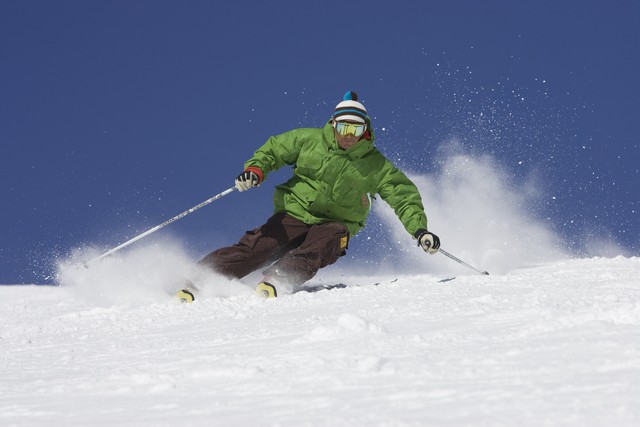
http://www.alpinemojo.co.uk/ offers performance snow sports coaching with a difference.
-
The Coolboard Workout – part 5
So this is the fifth and final part of our Coolboard series. This part gives you the final 3 exercises for your Coolboard routine. You can view the whole workout by visiting our Snow Fitness page.
The winter season is well underway and by now many people have already had their first snow fix. Clearly with the current economic gloom there may not be much cash around so making sure that you’re fit and tuned up for the snow is more important than ever, and then you can get the most from that hard earned lift pass!
Plus having your own Coolboard means you can fit in a few exercises when it suits you. If you haven’t got your Coolboard yet then head over to www.coolboard.co.uk to check out the options. Exercises have been devised by Adam Powell of Powell Fitness.
Coolboard Crunches:
Place the Coolboard on the floor and put the ball under one side like the Tilt Squats. From here sit yourself down at the bottom of the Coolboard then lean back onto it.
This is your start position with your knees bent and feet on the floor, look to get a 90 degree angle at your knees. From here contract your abdominal muscles and either crunch or sit up. Return to the start position and repeat.
Again look for a maximum of 20 reps and 3 sets.
Advanced Option:
To make this exercise harder assume the start position then slowly lean and push the deck so it is of the floor and balancing on the ball. From here start your crunches and sit ups and to make it even more advanced straighten one leg and lift it off the floor.

Coolboard Rocker:
Place the CoolBoard on the floor with the ball beneath it.
Get your hands on the board and grip each side. Take one foot out behind you then the other as though you were going to do a press up.
This exercise is quite advanced so even holding this position for 30 seconds can be advanced for some people.
Now you just start to push one hand/side down towards the floor and pull the other up towards you. Keep you abs switched on and don’t let your lower back arch or have your bum up in the air to much! This will stress your back.
Repeat this either for reps or a period of time e.g. 30 seconds.
Advanced Option:
As well as pushing one side down towards the floor you can roll the Coolboard to one side then repeat towards the other side so the board is making a figure of eight movement. Be careful of grazing your knuckles on the floor! Again repeat for reps of a period of time. Personally I prefer to run this for a certain amount of time.

Coolboard Dips:
Place the CoolBoard on the floor with the ball beneath it.
Sit on top of the Coolboard with your hands gripping the ends in a similar position to the Rocker. From here take your feet away from you so your knees are approximately at 70 degrees.
Now transfer your weight into your arms and slowly lift your bum off and forward of the Coolboard. Next you slowly lower down until your bum is just off the floor and you back is around 1 or 2 inches away from the edge of the Coolboard.
Push up focusing on using the back of your arms (triceps). Don’t let your legs take over. You will be surprised how much they assist this exercise.
Aim to do a max of 20 reps and 3 sets.

Advanced Option:
To increase the difficulty of this exercise straighten your legs. This means your legs cannot assist and places a lot more emphasis on the triceps. Trust me you will feel the difference. And for more advanced options try with one foot of the floor!
If you would like to know more about CoolBoard, click here, http://www.coolboard.co.uk, and if you would like to arrange a training session with Adam, call 07917 765372 or visit http://www.powellfitness.co.uk . Adam can train you in person at home or at his Fitness Studio if you’re local, or arrange a long distance training program.
-
The Coolboard Workout – part 4
Here are two more exercises in our Coolboard workout series. In total we will be bringing you eleven exercises to practise on your Coolboard to give you a good all body routine.
If you haven't got your Coolboard yet then head over to www.coolboard.co.uk to check out the options. Exercises have been devised by Adam Powell of Powell Fitness.
Coolboard Burpees:
Place the Coolboard on the floor without the ball beneath it.
Standing on top of the Coolboard jump back and down into a press up position with your hands on the grip tape section of the Coolboard and feet behind you on the floor. From this position stand up with your arms to the ceiling and aim to get your feet onto the Coolboard.As with previous exercises precision and technique is important. Aim to repeat for maximum of 20 reps and 3 sets or look to do as many as you can for a set period of time e.g. 60 seconds.

Advanced Option:
As soon as your feet land on the Coolboard instead of standing up you jump up high as you can, land into squat then repeat the burpees action.

Coolboard Foot Tap Squats
Place the Coolboard on the floor without the ball underneath.
Take the ball in your hands do a squat and twist the ball down towards one foot. Touch the ball down onto one foot or as far as you can go with good form and technique. Ensure you don’t let your knees twist to allow you to touch the ball to your foot. Return to the start position then repeat on the other side.You might find one side easier than the other but that is common and will improve with practice. Aim to do a maximum of 20 reps and 3 sets.

Advanced Option:
You can do this with the ball under the CoolBoard. Rather than holding the ball in your hands just keep your hands together and slowly repeat the action. It will be alot harder to get all the way down and touch your feet so go as far as you feel comfortable.
If you would like to know more about CoolBoard, click here, http://www.coolboard.co.uk, and if you would like to arrange a training session with Adam, call 07917 765372 or visit http://www.powellfitness.co.uk . Adam can train you in person at home or at his Fitness Studio if you’re local, or arrange a long distance training program.
-
Get fit for the snow – Coolboard exercises part 3
 So how's it going with that fitness routine?
 New Year is usually the time when people start thinking about their waistlines and fitness. It's the time when diet and fitness books fly off the shelves as everyone wants to lose the extra pounds gained over Christmas. This year, with most of us being credit crunched, gym memberships could be one of those "luxuries" to fall by the wayside – so the Coolboard can be a great home fitness tool. Take a look at some of the Coolboard benefits, and you'll see that when used correctly it can be far more than a simple balance tool.
Ok so here's the next set of exercises in the Coolboard snow fitness programme. Exercises have been devised by Adam Powell of Powell Fitness.
4. Single leg balance. (Ski specific):
Turn the board length ways and place your foot in the centre of the Coolboard. Do this exercise next to a solid object you can hold yourself up with e.g. wall, staircase etc.If the Coolboard is under your left foot slowly transfer your weight into your left leg and lift your right foot off the floor. Just staying on the Coolboard for a short period of time will fatigue your leg and try to work up to doing it without holding onto an object or stabilising yourself against the wall.
Aim for increasing your time holding the balance.


Advanced option: Single leg balance progressing to squats. This exercise is very advanced so take care and go slow!
5. Board hop over:
Turn the Coolboard lengthways and place it on the floor without the ball. Stand to one side of the Coolboard with your feet together. Now bend your knees into a half squat position then jump up and over the Coolboard landing in the same position on the other side.Make sure when you land you flex your knees to soak up the impact and to protect your knees and back.
The key to this exercise is to be precise on landing, spring up using your calves staying on your toes and keep your knees flexed slightly at all times and keep your feet together, imagine someone has wrapped tape around your legs.
Aim for a smooth transition over the Coolboard and come straight back so no stopping at each side. Progression can be either reps or time.

If you would like to know more about CoolBoard, click here, http://www.coolboard.co.uk, and if you would like to arrange a training session with Adam, call 07917 765372 or visit http://www.powellfitness.co.uk . Adam can train you in person at home or at his Fitness Studio if you’re local, or arrange a long distance training program.
-
Get fit for the snow – Coolboard exercises part 2
So with Christmas over and 2009 underway it's time to get serious about that fitness programme. Remember way back in 2008 we told you about the Coolboard? Well it's a great piece of kit for skiers and snowboarders, plus it's fun, it's portable and just a few minutes a day can help improve your balance skills, core strength and get those muscles fired up for the slopes. Part 1 of the Coolboard programme gave you the basic standing balance exercise and tilt squats. Part 2 shows you lunges and calf raises. Exercises have been devised by Adam Powell of Powell Fitness.
Lunges: The Lunge is a great exercise that works all of the muscles in the legs and hips and will benefit both skiers and snowboarders. Set up is the same as the Tilt Squats.
Place one foot in the middle of the Coolboard and the other behind you. Make sure that both feet are pointing forwards.
Keep your weight evenly between heel and toe, keep your shoulders level looking forward all the time. Focus on dropping your back knee straight down. Your front knee will automatically bend and check that it doesn’t track over your toe line.
Your back heel should be off the floor when doing the lunge.
Remember the lower you go the greater the effort required, keep your core muscles fired up and ensure good form for every repetition.
Aim for a maximum of 20 reps each leg and 3 sets. Progression is from 1 set of 10 reps upwards. Also look to do pulses and holds at various angles looking to increase your time each session.
Advanced option: The dynamic lunge is where you jump and switch legs before landing. This requires 100% commitment and good co-ordination. It will also get your heart racing. Aim for a period of time rather than reps eg. 30 seconds, 60 seconds, hardcore is 2 minutes plus.


Calf Raises: The calf raise helps strengthen the lower leg whilst working on the stabiliser muscles around the ankle. Even though ski and snowboard boots are very supportive it is still important to train the whole leg and not just focus on the thigh muscles. Set up is the same as the Tilt Squats.
Place both feet on the Coolboard with your heels just touching the floor. If your balance isn’t great you can do this exercise near a wall or table so you can help steady yourself.
Keeping your legs straight and keeping your knees straight lift your heels up and imagine you are trying to pull your heels towards your calf muscles.
Aim for a maximum of 20 reps and 3 sets. Progression is from 1 set of 10 reps upwards. Also look to do pulses to add variety.Advanced option Single leg calf raise places more emphasis on one leg. Tuck your foot behind the heel of one leg and focus on raising up and down on just one leg. This really loads up the muscles of the lower leg and into the stabiliser muscles around the ankle and really taxes your balance. You should find you will tire a lot sooner.
If you would like to know more about CoolBoard, click here, http://www.coolboard.co.uk, and if you would like to arrange a training session with Adam, call 07917 765372 or visit http://www.powellfitness.co.uk . Adam can train you in person at home or at his Fitness Studio if you’re local, or arrange a long distance training program.
-
Get fit for the snow with CoolBoard – Part 1
You probably are already aware of the benefits that some pre-holiday training can bring, but possibly don’t realise just how much.
Nic Smith of CoolBoard says:
"Injury is one of the worst ways to cut your holiday short. Preparation can drastically reduce your chances of injury, and as 40% of ski injuries are knee related, the knee might be a good place to start. If you have injured yourself in the past, there is likelihood that although it feels fine for normal life, the injured part is not ready for the demands of the piste making some preparation even more vital. And if none of this worries you, I bet you still want to get the maximum amount of fun from your trip, and finding yourself too tired in the afternoon or as the week progresses seems a waste of what could have been… "
As mentioned in our previous Get fit for winter post, the CoolBoard is an ideal tool to help build up your ski and snowboard fitness.
There are many exercises that can be done with CoolBoard, and CoolBoard’s master trainer, Adam Powell of Powell Fitness, will be showing you the best ways to prepare for your holiday. The first two exercises are shown below, and we’ll give you more as regular updates. Some will be ski or snowboard specific, most will be useful for both.
http://skiblog.chaletsdirect.com/files/gimnasio1web.mov
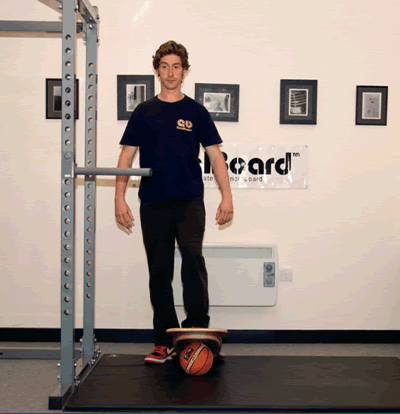
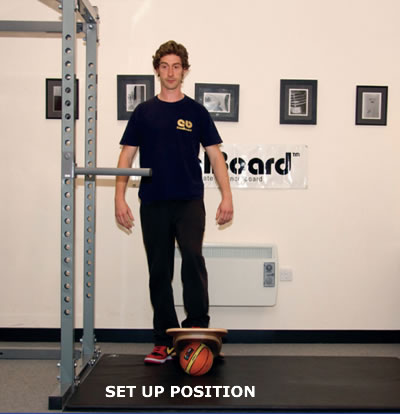
Exercise 1: Standing balance:
This exercise will take a little time to learn, but you will be benefiting from the moment you start.
Start holding on to a support and progress as you can… start with a couple of minutes, and increase up to 10 minutes as your ability grows.
By balancing on a CoolBoard you are working all the best bits. Your balance is being worked, helping to keep you upright, and increasing agility. Stabilising muscles of all the lower joints will be firing, making them stronger.
Your core strength and stability are coming into play. Dormant muscles (often unknown) will be caused to fire up again.
For Snowboarders, CoolBoard is an ideal movement simulator, especially for off-piste and powder. Rail grinders will also learn to hit that sweet spot and hold it. Grabs can be practiced.
Exercise 2: Tilt Squats:


The Tilt squat will benefit both skiers and snowboarders as the increased angle at the hips simulates different angles and therefore muscles you will encounter on the slopes.
Ensure one side is on the floor and the ball placed against the ring on the other side of the Coolboard. Keep your weight evenly between heels and toes, keep your shoulders level squat down ensuring your knees don’t track over your toes and your lower back doesn’t hyper extend or flex too much.
Remember the lower you go the greater the effort required, keep your core muscles fired up and ensure good form for every repetition.
Aim for a maximum of 20 reps and 3 sets. Progression is from 1 set of 10 reps upwards.
Also look to do pulses and squat holds at various angles looking to increase your time each session.
If you would like to know more about CoolBoard, click here, http://www.coolboard.co.uk/, and if you would like to arrange a training session with Adam, call 07917 765372 or visit http://www.powellfitness.co.uk . Adam can train you in person at home or at his Fitness Studio if you’re local, or arrange a long distance training program.
-
Get fit for winter with CoolBoard!
The winter season is fast approaching – many ski resorts are on the brink of opening, snow is falling with lots more due this weekend – so if you haven't started to think about upping your fitness levels, then now is the time to do it!
Yes we know Christmas is coming – with all the pressures to eat, drink and be merry that involves, but a little preparation now will mean you'll get much more out of your ski or snowboard holiday. After all we all know that ski holidays are not cheap – particularly in current times, so wouldn't it be great to be able to be on the mountain each day without getting exhausted? Get the best value from your lift pass and improve your fitness at the same time.
So where to start? Well as we mentioned previously in our What makes a great Beginners Week post, ideally you should be combining both aerobic and anaerobic exercise. But simply pumping iron is not the most effective way to fire up your body for the slopes. You should also be doing stuff to improve core strength and proprioception. One of the most effective ways of doing this is by using equipment designed to improve balance and posture.
Featured on Channel 5's The Gadget Show a few weeks ago, the CoolBoard is a great fitness tool for skiers,snowboarders, (and everyone else), and will do the trick if used regularly.

Pretty much every sport and activity you do will benefit from improved core strength – from ballroom dancing to golf, from snowboarding and skiing to horse riding. Having a strong core means that your body can work efficiently, and less strain is put on smaller, naturally weaker parts of your body – such as knee ligaments.
Nic Smith of CoolBoard says:
"Free floating on a ball, kept safe by our cleverly shaped ring, CoolBoard doesn’t suffer the limited movement of other balance boards and equipment. This makes it excellent for balance, core strength and stability, and all those stabilising muscles – the muscles responsible for holding a joint correctly in use, all of which is badly needed for snow fitness."
We are hoping to be showing you more and more ways of using the CoolBoard in the coming weeks and how it can help you get fit, strong and more prepared to have the best winter holiday ever!
In the meantime if you'd like to know more about the CoolBoard and the benefits take a look at their website. It's a portable and fun way to build up your balance skills and improve your core strength, without having to spend hours at the gym!


![Flaine09-10(240)[640x480]](https://i0.wp.com/skiblog.chaletsdirect.com/wp-content/uploads/2012/02/mt_imported_image_1757430552.jpg "Flaine09-10(240)[640x480]")