-
Why More Americans Are Skiing in Europe — and Why Now’s the Time to Try It
Skiing in Europe used to be a bucket-list dream for many Americans — something for “one day.” But over the past few winters, that dream has quietly become reality.
At Chalets Direct, we’ve seen a rise in American skiers booking ski holidays in France, Switzerland, Italy, and Austria. It’s not a coincidence. Skiing in Europe has never been more accessible, affordable, or rewarding.If you’ve ever wondered whether it’s worth flying across the Atlantic for a ski trip, here’s why now is the perfect time.💶 1. Europe Offers Better Value for Money
Let’s be honest — skiing in the U.S. has become incredibly expensive. A single day lift ticket at Vail or Deer Valley can top $250 per day, before food or accommodation.In contrast, European ski resorts deliver world-class skiing at half the cost:-
Full-week lift passes often cost less than three U.S. day passes
-
Charming, independent chalets offer better space and hospitality
-
Restaurant-quality mountain lunches cost less than a cafeteria burger
Even after accounting for flights, a full ski week in France, Austria, or Italy can cost less than six days at a U.S. resort — with better snow variety and unforgettable scenery.🌍 2. Your Ski Pass Might Already Work in Europe
Many American skiers don’t realise that their Epic Pass or Ikon Pass includes access to top European ski destinations.That means you can ski legendary resorts like Verbier, Zermatt, and the 3 Valleys without buying a separate lift pass. The global ski-pass model has opened the door for Americans to explore the Alps easily — and often at no extra cost.✈️ 3. Easier Travel and Strong Dollar Advantage
Flights from the U.S. to Geneva, Zurich, and Milan have become more frequent and more affordable. The strong U.S. dollar also means your ski budget stretches further in Europe than it has in years.With smooth transfers and modern infrastructure, resorts like Chamonix, Morzine , The 3 vallees, St Anton, Alpe d’Huez, and even Val d’isere are within easy reach of major airports.🏔️ 4. The Skiing Itself Is Unmatched
Skiing in Europe is more than a sport — it’s a journey through mountains and culture. You can ski through three valleys, across languages, and even over national borders — all in one day.And then there’s the food, the atmosphere, and the soul of it all. Long, scenic runs end in sunny terraces with a glass of wine or a homemade tartiflette. Après-ski happens in quaint villages, or on mountain terraces with live music, DJ’s and a real party atmosphere.For many Americans, that sense of history and style makes European skiing a revelation.🏡 5. Accommodation: A Ton of Choices
You can find the large chain hotels, with ski valets, the latest spa facilities and top-notch services. You’ll also find family-run pensions and hotels which have been in the family for 3 generations or more. You’ve got all kinds of apartments and self-catered options and of course you’ll also find the catered chalet. They’re warm, social, and personal — like staying in a mountain home.Chalets Direct offers a large selection of options — from budget-friendly to luxury — across France, Austria, Switzerland, and Italy. The majority are owned and managed by people who’ve made their life in the mountains. They are local experts who live, love and breathe their mountain environment.For U.S. visitors, chalets represent the kind of hospitality and atmosphere that’s unique and difficult to find outside the European ski experience.💬 6. What Americans Are Saying
“We’ve skied Colorado for 20 years, but Europe blew us away. The food, the villages, the price — it’s better in every way.”
— The Miller Family, Vermont“Our week in Chamonix cost less than our last trip to Aspen — and the memories were priceless.”
— Rachel & Dan, California🧭 Why You Should Book Now
With rising U.S. ski prices, a strong dollar, and growing U.S.–Europe flight options, there’s never been a better time to experience skiing in Europe.Whether it’s the majestic peaks of Zermatt, the charm of Les Gets, or the vast playground of Les Trois Vallées, your next great ski adventure is waiting.And Chalets Direct makes it easy — use The Solutions Room to find your match, check out our great offers , or browse a massive choice of chalets, apartments, and ski hotels direct from the owners and operators who know the mountains best, and get the personal touch.🏔️ Ready to Ski Europe?
👉 Explore the Alps. Your European ski holiday starts here! -
-
Countdown to your Winter Ski Holiday

That feeling when you know you’ve got it all down! October Check-In: What Should You Be Thinking About for the Ski Season?
It’s the start of October — the leaves are turning, the evenings are cooler, and the first snowfalls are already dusting the high peaks. For skiers, that means one thing: the season is around the corner. But before you zip up your ski jacket and click into your bindings, there are a few things worth thinking about now.1. Where Do You Want to Ski?
By October, the most popular weeks and chalets are already filling up. If you’re planning to ski at Christmas, New Year, or February half term, now’s the time to lock it in. Even outside of peak weeks, booking early gives you the best choice of resorts, properties, and travel options.2. Flights & Travel
Flights to major ski hubs (Geneva, Innsbruck, Turin, Lyon) are often cheaper and more flexible if you grab them early. If you’re thinking train or self-drive, now’s the moment to plan routes, times, and overnight stops if needed.3. Ski Fitness
It’s not glamorous, but it makes the biggest difference. A little strength and mobility training now will pay off massively on the slopes. Even simple exercises like squats, lunges, and core work will help prevent injuries and improve your skiing endurance. Check out our snow fitness blogs for loads of tips to get you started!4. Gear Check
Open that ski bag. Do your boots still fit well? Are your skis serviced? Does your outerwear need replacing? October is perfect for sorting this out — avoid the December rush and make sure you’re ready to go from day one.5. Insurance & Passes
Travel insurance with winter sports cover is essential. Some resorts also offer early-bird discounts on lift passes, so it’s worth checking if you can save money by booking now.6. Skills & Safety
If you want to level up this season, think ahead about lessons. Booking ski schools or private instructors in advance gives you better availability, especially in English-speaking ski schools. And don’t forget — brushing up on the FIS safety rules will keep everyone safer and happier on the slopes. Check out our previous post on safe, accurate skiing and snowboarding.Ready to Go?
October is the sweet spot: the season is close enough to feel real, but you still have time to plan. Get your chalet, your travel, and your gear in place now — so when the snow falls, all you have to do is ski.Find your perfect chalet today on Chalets Direct , if you’re looking for tempting offers see our promotions, if you’re stumped for ideas use the Solutions Room, and get your season started the right way! -
When should you invest in your own ski gear?
Well-fitted ski boots and appropriate skis are crucial for improving your ski performance, but if you had to prioritize one over the other, a good fitting ski boot would generally be more important. Here's why:
Ski Boots: Properly fitting ski boots are the most important piece of equipment in skiing. They are the direct link between your body and the skis. A well-fitted boot ensures that you have control over your skis, can transfer your movements effectively, and maintain balance. If your boots don't fit correctly, you may struggle to control your skis and your skiing performance will suffer. Badly fitting boots can also lead to discomfort, pain, and even injuries.
Skis: While skis are essential, they come second in priority after boots. The choice of skis depends on your skiing style and goals. However, with good boots, you can adapt to various ski conditions and terrain using different skis. Skis can enhance your skiing experience and performance, but they don't have as direct an impact as boots.
In summary, if you're looking to improve your ski performance, start with properly fitted ski boots. Once you have a good boot, you can then consider upgrading or selecting skis that match your skiing style and preferences. A combination of well-fitted boots and suitable skis is ideal for achieving the best skiing performance. Consulting with a knowledgeable ski shop or boot fitter can help you find the right equipment for your needs.
A good ski boot fit is essential for an enjoyable and safe skiing experience. A properly fitted ski boot should feel snug and secure while providing comfort and control. Here are some characteristics of a good ski boot fit and the reasons behind them:
- Snug but not overly tight: The boot should feel snug around your foot without causing pressure points or discomfort. It should hold your heel firmly in place to minimize heel lift, which can affect control and lead to blisters or discomfort.
- Toes touching the front: When you first put on the boot, your toes should lightly touch the front of the boot liner. When you flex your knees forward, your toes should pull back slightly from the front, creating a small gap. This ensures that your toes won't be jammed against the boot when skiing downhill.
- Proper width and volume: The boot should match the width and volume of your foot. Ski boots come in various widths (last widths), and the fitter should assess if you have a narrow, medium, or wide foot to recommend an appropriate boot model. Volume is also essential to prevent unnecessary pressure points or empty spaces within the boot.
- No excessive pressure points: A good boot fitter will check for pressure points or discomfort and may use custom insoles or boot modifications to alleviate them.
- Secure calf and ankle fit: The boot should provide a snug fit around your calf and ankle to ensure proper control and power transfer while skiing.
A skilled ski boot fitter will ask you a series of questions to determine the best fit for your specific needs and skiing style. Some common questions might include:
- What is your skiing ability level? (Beginner, intermediate, advanced, expert)
- What type of skiing do you primarily do? (Alpine, backcountry, freestyle, racing)
- Do you have any specific foot issues or previous injuries that need to be considered?
- What is your foot width and shape? (Narrow, medium, wide, high arch, low arch)
- Do you prefer a more performance-oriented or comfort-oriented fit?
- What's your typical terrain and skiing conditions? (Groomed slopes, powder, moguls, park)
- What is your budget for ski boots?
- Have you ever had a ski boot fitting before, and if so, were there any issues with your previous boots?
The boot fitter will also measure your foot's length and width and may use a footbed scanner or other tools to assess your specific foot shape. They will then recommend a selection of boots that match your preferences and needs. Trying on multiple boots and assessing the fit while skiing in them is a crucial part of the fitting process to ensure you find the perfect match for your skiing adventures.

-
Ski Fitness – Suggested programme for Weeks 3-4
Here's a more detailed fitness program for weeks 3-4 of your preseason ski fitness plan. These weeks focus on building endurance, strength, and mobility to prepare you for the physical demands of skiing:
Week 3-4: Building Endurance and Strength
Day 1: Cardiovascular Conditioning and Strength Training
Warm-up (5-10 minutes):
- Jumping jacks, brisk walking, or light jogging to increase heart rate and warm up your muscles.
Cardiovascular Conditioning (30-45 minutes):
- Choose your preferred cardio activity (cycling, running, or elliptical) and maintain a steady pace.
- Incorporate 1-2 minutes of high-intensity intervals (e.g., sprinting) every 10 minutes to challenge your cardiovascular system.
Strength Training (Bodyweight and Dumbbell Exercises – 3 sets of 12-15 reps each):
- Bodyweight squats or goblet squats with dumbbells: Hold a dumbbell close to your chest while performing squats.
- Push-ups (standard or on knees).
- Planks (30-45 seconds): Gradually increase the duration.
Cool-down (5-10 minutes):
- Gentle static stretching for major muscle groups, especially legs and chest.
Day 2: Active Rest or Low-Intensity Activity
- Engage in light activity such as walking, swimming, or yoga for active recovery.
Day 3: Cardiovascular Conditioning and Flexibility
Warm-up (5-10 minutes):
- Same warm-up as Day 1.
Cardiovascular Conditioning (30-45 minutes):
- Continue your cardio activity, focusing on maintaining a steady pace with brief high-intensity intervals.
Flexibility and Mobility (15 minutes):
- Dynamic stretching and mobility exercises.
- Incorporate yoga or Pilates to enhance flexibility and balance.
Day 4: Strength Training
Warm-up (5-10 minutes):
- Same warm-up as Day 1.
Strength Training (Bodyweight and Dumbbell Exercises – 3 sets of 12-15 reps each):
- Reverse lunges or dumbbell lunges.
- Push-ups (standard or on knees).
- Side plank (each side, 30-45 seconds).
Cool-down (5-10 minutes):
- Focus on stretching the muscles worked during strength training.
Day 5: Active Rest or Low-Intensity Activity
- As in previous weeks, engage in a light activity or yoga for active recovery.
Day 6: Cardiovascular Conditioning and Flexibility
Warm-up (5-10 minutes):
- Same warm-up as Day 1.
Cardiovascular Conditioning (30-45 minutes):
- Continue with your chosen cardio activity, striving to maintain or slightly increase intensity.
Flexibility and Mobility (15 minutes):
- Continue to work on dynamic stretches and mobility exercises.
Include balance-focused drills for improved stability.
Day 7: Rest
- Allow your body to rest and recover fully. Rest is essential for preventing overtraining and injury.
As you progress through weeks 3-4, aim to increase the intensity of your cardio workouts gradually and add more challenging variations to your strength exercises. Stay hydrated, get adequate sleep, and pay attention to your body's signals to ensure you're progressing safely and effectively. This phase of training will help you build the endurance and strength necessary for skiing.
Remember that this is a general guideline, and your pre-season fitness program should be tailored to your individual fitness level, goals, and any specific areas of weakness or concern. If you're unsure about any aspect of your fitness program, consult with a fitness professional or trainer for personalised guidance. Check out Lineham Fitness – for a personalised programme, online or face to face training and great tips and advice on fitness and nutrition.
Always consult with a healthcare professional before beginning any new exercise program, especially if you have pre-existing medical conditions or concerns.
-
Start your ski fitness programme and see the results on your next ski holiday!
Preparing for a ski holiday requires a combination of cardiovascular fitness, strength, flexibility, and balance. A pre-season fitness program should ideally start 8-12 weeks before your trip to build the necessary stamina and strength for the slopes. Always consult with a healthcare professional before beginning any new exercise program, especially if you have pre-existing medical conditions or concerns.
Weeks 1-2: Establish a Foundation
- Cardiovascular Conditioning: Aim for 20-30 minutes of low to moderate-intensity cardio exercise (e.g., brisk walking, cycling, or swimming) 3-4 days a week.
- Strength Training: Perform bodyweight exercises like squats, lunges, planks, and push-ups 2-3 days a week. Start with 2 sets of 10-12 repetitions for each exercise.
- Flexibility and Mobility: Incorporate basic stretching exercises targeting major muscle groups. See these two links for useful warm up stretches stretch 1 – and here stretch 2 . These videos have been provided by Chris at Lineham Fitness.
Contact him for excellent guidance and a personalised fitness routine!
Weeks 3-4: Build Endurance and Strength
- Cardiovascular Conditioning: Increase the duration of your cardio sessions to 30-45 minutes. Add interval training to improve stamina, alternating between high-intensity bursts and recovery periods.
- Strength Training: Continue bodyweight exercises and consider adding light dumbbells for added resistance. Increase to 3 sets of 12-15 repetitions for each exercise.
- Flexibility and Mobility: Introduce yoga or Pilates to improve flexibility and balance. Stretch after each workout to increase range of motion.
Weeks 5-6: Focus on Ski-Specific Training
- Cardiovascular Conditioning: Incorporate exercises like stair climbing or hiking to mimic the leg endurance needed for skiing. Maintain interval training.
- Strength Training: Begin to integrate sport-specific exercises like squats with a stability ball or step-ups. Add resistance bands for lateral leg strength. 3 sets of 15-20 repetitions.
- Flexibility and Mobility: Prioritize dynamic stretching to mimic skiing movements. Continue yoga or Pilates sessions.
Weeks 7-8: Peak Conditioning
- Cardiovascular Conditioning: Increase the duration of cardio sessions to 45-60 minutes. Focus on maintaining a high level of fitness.
- Strength Training: Progress to more advanced strength exercises, including single-leg squats and deadlifts. 3 sets of 15-20 repetitions with increased resistance.
- Flexibility and Mobility: Prioritize dynamic stretching. Include balance exercises like single-leg squats on an unstable surface (e.g., a Bosu ball).
Weeks 9-12: Maintain and Refine
- Cardiovascular Conditioning: Continue high-intensity cardio sessions. Implement sport-specific drills, such as agility ladder or cone drills.
- Strength Training: Maintain a well-rounded strength program, emphasizing lower body strength and core stability. Add plyometric exercises like box jumps for power.
- Flexibility and Mobility: Continue dynamic stretching and balance work. Incorporate foam rolling to release muscle tension.
Additional Tips:
- Maintain a healthy diet to support your training efforts.
- Stay hydrated, especially if you're training at higher altitudes.
- Consider taking ski lessons or working with a ski instructor to fine-tune your technique.
- Allow for rest and recovery days to prevent overtraining and reduce the risk of injury.
Remember that this is a general guideline, and your pre-season fitness program should be tailored to your individual fitness level, goals, and any specific areas of weakness or concern. Gradually progress through the program, and don't push yourself too hard to avoid injuries. If you're unsure about any aspect of your fitness program, consult with a fitness professional or trainer for personalised guidance. Check out Lineham Fitness – for a personalised programme, online or face to face training and great tips and advice on fitness and nutrition.
To inspire you to get going take a look at some of the behind the scenes work put in by Mikaela Shiffrin, the greatest alpine skier of all time!
-
The Three Valleys and its Three Snowparks
Based full time in the Three Valleys for over 20 years, Clare from Ski Magic has brought up her two children here, with winters spent exploring this huge ski area (and of course that means plenty of time hanging around the various snowparks and fun areas!)
Here’s her guide for anyone planning a ski holiday with older children, teens or people whose idea of fun is flying off jumps or sliding along rails.
Where are the best Three Valleys’ snowparks?
There are several snowparks across the Three Valleys which are dedicated to freestyle fun. Each has its own ‘personality’ and style, and each one has an area for beginners, intermediates and experts so you can gain experience and confidence just like on the pistes.
The actual elements (the jumps/things to do) in each snowpark changes during the season, depending on the amount snow and the creative inspiration of the team that builds them, so you can’t guarantee there will be the same things each year, but usually the snowparks are located in the same places which are shown on the Three Valleys piste map.
Not sure what some of the freestyle terms mean? Scroll down for our lingo explainer!
Here’s our guide on where to get your kicks in the 3 Valleys for freestyle.
Courchevel Family Park
From the name “Family Park” you’d think this was a bit tame, but actually a lot of local freestylers come here instead of heading to Meribel. Stronger beginners and intermediates will definitely enjoy the boardercross (to the right as you go through the entrance), with its rollers and hairpin turns. Go one at a time, or race between two (any more than that and it’s a bit crowded!)
At the Family Park you’ll also find kickers rated S, M, L and XL, and often within these graded routes are rails and boxes.
The site itself is not enormous but actually that makes it easy to do a few quicker laps using the drag lifts Sources/Rocher de l’Ombre, or Biollay chairlift.
There are also two Big Air Bags alongside the Family Park – one is for skiers/boarders, and there’s also one for sliding down whilst sat in a tractor inner tube style ring. There are a few picnic benches at the bottom so you can watch the jumpers or have a snack.
How to get to Courchevel Family Park: Located in Courchevel 1850. Take the Verdons gondola lift or the Sources/Rocher de l’Ombre drag lifts. It runs parallel to the blue Verdons piste so anyone that wants to avoid the snowpark can do that and meet up again at the bottom.
Laps: Sources/Rocher de l’Ombre drag lifts.Meribel Snowpark
Meribel’s Open Park is much bigger than Courchevel Family Park, and has loads of different features for all levels with some really challenging elements. The route starts with a half pipe, then there are kickers, boxes and rails in Small, Medium and Large, with a quarter pipe lower down. You’ll also find a ski cross run to the left. The ‘Experts’ zone has the biggest XL jumps, which are for ‘experts only’ as the signs say.
How to get to Meribel Snowpark: At the top of the Plattières bubble.
Laps: on the chairlift Chatelet.Val Thorens Snowpark
The original Three Valleys snowpark is in Val Thorens, and it’s still a good one! There are several elements and features for different levels: a boardercross, three freestyle zones depending on how big you want to go, plus rails, boxes and a half pipe.
You’ll also find an airbag next to the Le Roc drag lift at the Rond Point des Pistes and is open in the afternoons.
How to get there: Via the Moutière chairlift.
Laps: on the Plateaux drag lift.What are the fun areas for younger children in the Three Valleys?
The Three Valleys is well set up for smaller children too. There’s the Elements Fun Park at the top of the Legends chairlift from Meribel Chaudanne, as well as Inuits and Yeti zones. Courchevel’s Family Park has a boardercross which is nice for kids who aren’t yet ready to fly off the the jumps but want the sensation of flying!
In Meribel there’s also the Piste des Animaux with info points and sculptures of the local animals, like eagles, marmottes and wolves.
How to stay safe in the Three Valleys snowparks:
- Start small, and try out the S jumps to get a feel for it, especially if it’s your first time, or your first day back on skis/a snowboard.
- Once you’re ready to try the M kickers, wait at the top to watch others hit them first, so you can get an idea of the speed needed to clear the jump – the last thing you want to do is go too slow and end up landing too short.
- In general, snowparks are busier after lunchtime once the snow has become softer and nicer to land on. If it’s busy, you know conditions are ideal!
Freestyle ski and snowboard lingo explainer:
Features/Elements: The fun parts of the snowpark, ie. the jumps, rails etc.
Kicker: a jump
Rail: looks like a handrail, made of metal. For sliding sideways on.
Box: A long metal/plastic ‘box’ with a flat top. Slide either forwards, backwards or sideways.
Boardercross/Ski Cross: a route with ‘rollers’ – little hills – to go up and down. You can ski or snowboard on it.
Air bag: A huge inflatable cushion – slide down the kicker and fly into the air, then land safely on the bag.
Park rat: Someone who hangs out at the snowpark a lot.
Switch: Skiing or snowboarding backwards
Flip: back flips or front flips can be done on the largest kickers.
180 or ‘one eighty’: A spin to face the opposite direction, ie. if you’re skiing forwards and do a 180 jump, you’ll land in switch (backwards!)
360/720 etc.: If you do a 360, you spin all the way round, 360 degrees. The numbers go up, the further you spin, ie. 540, 1080…. It’s usually said ‘three sixty’ etc. rather than ‘three hundred and sixty’!
Grab: Whilst in the air, grab different parts of your skis or snowboard and hold for a couple of seconds until you start to descend back to the snow.
Send/sendy: if it’s a big or sendy jump, you need to send it, to make the landing.
Butter: putting all your weight onto the tip or tail of your skis or snowboard to slide and spin.
Stack: If you don’t land a jump, you’ve ‘stacked it’!
Steezy: Looking good (think style + ease)
Gnarly: A person or a jump can be gnarly. Basically means terrifying!
Thanks to Clare for all the valuable tip and insights! Ski Magic have catered and self-catered chalets in Courchevel, La Tania and Meribel. With tons of experience and expertise they have been offering amazing ski holidays in the Three Valleys for over 20 years! Check out their chalets here!
-
Why the mountains are a great summer destination too!
The ski season is almost over – there's a few resorts, such as Val d'Isere, which are extending their winter for a little longer due to bumper April snowfall, but the majority have closed or will be closing in the next few days.
 But did you know that the mountains are a fantastic summer destination too? Here's just a few reasons why:
-
Amazing scenery: the Alps offer stunning natural beauty with majestic mountain peaks, rolling hills, and crystal-clear lakes. This makes it a great destination for hiking, cycling, and other outdoor activities. Most resorts have dedicated hiking and mountain biking trails. It's incredible how different a resort you know and love in the winter will look when the snow has gone.
-
Great temperatures: summers are typically mild and sunny, with average temperatures ranging from 15-25°C. This makes it a comfortable climate for outdoor activities such as golf, tennis, climbing, paragliding etc. With the extreme heatwaves that occurred across Europe last year, resorts at altitude provided a welcome respite. It's best to be prepared for the odd rainy day however, as the weather can be more unpredictable than your average beach town.
-
Lots to do: we've already mentioned hiking, cycling, mountain biking, but there's also swimming, rock climbing, white water rafting, and more. You'll find lots of cultural and historical attractions too, such as museums, castles, and picturesque villages in the local areas – so a car can certainly be a bonus for visiting some of the most beautiful towns dotted around the Alps. Alpine towns and villages also preserve and celebrate local heritage – with charming, picturesque markets and summer festivals.
-
Delicious cuisine: The alpine region is known for its delicious cuisine, which features hearty dishes like cheese fondue, raclette, and schnitzel. The region is also famous for its cheeses, wines, and beers.
-
Relaxation and wellness: with the growth of summer tourism, the mountains are also a great destination for those looking for relaxation and wellness. There are many spas and wellness centres in the region that offer massages, saunas, and other treatments.
 Overall, the Alps offer a great combination of natural beauty, outdoor activities, delicious cuisine, and relaxation, making it a perfect destination for summer holidays. So what are you waiting for? Check out our range of summer holidays here!
 -
-
Chalet Food Deliveries – giving you more options for your ski holiday!
Whether it's Hello Fresh or Amazon Now, people today expect their products to be fast, easy and – most of all – delivered. Living busy lives, we're asking for more and more of our goods and services to come to us — from burgers to ironing boards and everything in between.
So it's no surprise to see the same trend reflected in ski resorts. When booking their winter escapes, savvy skiers are increasingly turning away from traditional, off-the-shelf packages. Instead, they're cherry-picking the best local services and getting them delivered to the chalet door.
Build your own ski holiday
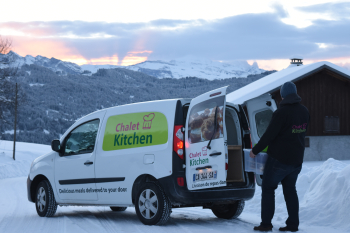 It starts with a door-to-door transfer and lift passes waiting on arrival. Then there's the ski hire delivery and boot-fitting service right in your own chalet.
When it comes to childcare, your nanny will usually come to collect the little ones. And after a long day on the slopes, why go limping out into the snow when you can get your massage treatment in the comfort of your chalet?
Then there's the chalet catering.
Traditionally, the Alps offered a straight choice between self-catered accommodation or a chalet with a host. But, over the last few years, growing numbers of skiers have been opting for a third option of getting food delivered to the chalet or apartment.
As just one example, we recently shone a spotlight on a frozen meals delivery service. But there are other options, too — perhaps the best-known being www.chaletkitchen.com.
Since it was founded in 2013, Chalet Kitchen has been delivering fresh meals to chalets and apartments throughout the Portes du Soleil ski area. Ordering meals for all or part of their holiday, guests can receive a daily morning delivery of breakfast and a two-course evening meal, plus tasty afternoon cakes.
Company founder and head chef, Raphael Cabuis, explains: "you just have to pop the main dish in the oven, serve – et voilà!" All the benefits of going catered without the restrictions and costs of having chalet hosts. If their reviews are anything to go by, hungry skiers are lapping it up.
The flexi-catering revolution
 In fact, food deliveries have become so popular that chalet companies are now looking to get in on the action. Offering a no-frills package of meals plus accommodation, various companies are now rebranding this concept as "flexi-catering".
Some are even putting their own spin on it. In Chalet Clovis, Host Savoie call it HS Fusion. But the concept is always the same: enjoy a more flexible holiday and save money by doing without the chalet staff. The money you save can cover the cost of your transfers and your ski hire.
Having road-tested the flexi-catering idea with a stay at Raphael's own chalet company, Mountain & Tradition, The Daily Mail Ski Supplement described flexi-catering as "one of the best-kept secrets in the Alps" (see here).
Past guests certainly seem to agree that having chalet meals come to you is a concept which can deliver great value and plenty of flavour, too.
Find out more
Food delivery with Chalet Kitchen is available from €16 per person per night. For more information, visit www.chaletkitchen.com. If you’re a chalet owner looking for background catering options, click here.
-
Traditional Coq Au Vin – recipe from Bon Appetit
If you're planning an alpine getaway to the Morzine, Les Gets, Samoens area this summer, or next winter, and don't want the hassle of shopping, cooking or always eating out, then there is a great solution available.
 Bon Appetit is a gourmet frozen meal service which will deliver superbly-cooked dishes to your door, so all you have to do is heat and eat. You can order online in advance of your holiday or even order when you're in resort for next day delivery. The menu is broad and mouthwatering, with dishes ranging from traditional Tartiflette to Thai Green Curry.
 Bon Appetit is the brainchild of Martin Clare, a professional chef from London who has always had a love for the mountains. Now based in the Northern French Alps, Martin can combine his two loves of skiing and creating wonderful food.
Martin has shared with us here the recipe for one of his favourite dishes – a traditional Coq au Vin with a twist. As the British summer is on hold for a few days, why not give it a try!

Coq au Vin
- 1 bottle of Burgundy or pinot noir,
- 6 chicken legs in two,
- 1 small leek in rounds,
- 2 sticks of celery in sticks,
- 2 carrots in thick long slices,
- 3 springs of thyme,
- 3 bay leaves
Marinate all the above overnight in a saucepan.
Remove legs from liquor and lightly sauté in butter till golden brown, pop back into the pan with 350ml chicken stock, 1 pinch of pepper and a good pinch of salt.
Take the saucepan to the heat, bring to a simmer and let it tick over for about 45 mins.
You will now have time to sauté 250g sliced button mushrooms, 24ish baby white pearl onions, 200g lardons.
When the leg meat is nearly falling from the bone, remove from liquor and set aside.
Lightly thicken with 30g of cornflour.
Chefs tip: add 2 beef OXO cubes, a dash of balsamic vinegar and 30g good very dark chocolate, this will cut the acidity and give it richness and depth of flavour.
Add back the chicken, mushrooms, onions and lardons. Bring back to the heat for 5 mins, finish with roughly chopped parsley and serve from the pot. Serve with mash or dauphinoise and green beans, Dijon on the side. Bon Appetit!
 Click through for more information about Bon Appetit where you will see full details of their menu and how to order.
 -
Big snowfall forecast this week and excellent ski offers available for March and April!
This winter has been special so far, with fantastic snowfall in January, great conditions in February and now March is looking set to bring us some excellent skiing!
It's a snowy week ahead, with some areas due to receive half a metre or more, so it's a great time to look out for your next ski break. There's a lot to be said for a spring ski holiday – longer daylight hours, leisurely lunches on sunny terraces, great weather to enjoy piste picnics – and this year there are some unbelievably good offers available!
If you're flexible check out the Last Minute offers – there's a lot of tempting deals including free lift passes, free Eurotunnel crossings, free airport transfers and some great reductions.
Whilst Easter weekend is later this year, you can find some excellent offers for the school holiday period starting at the end of March – so if you want to treat yourself and the family, you can get some great prices. You can see our Easter offers here!
We're on the final stretch of this ski season but the skiing is great and with the big dumps that are forecast conditions are going to be great through to the end! So if you're hovering why not just take the plunge and get out to the mountains!
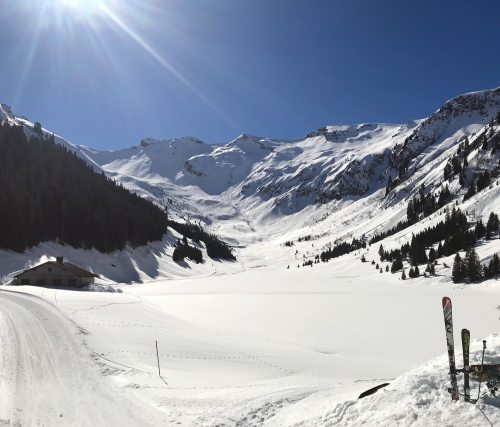
Get away from it all this spring!