-
Top Tips for planning your Christmas Ski Holiday….by Heather Morison, Ice and Fire Holidays
This week Heather from Ice and Fire in La Plagne offers great advice if you're considering spending your family Christmas in the mountains.
 A Christmas ski holiday can be an amazing experience for children – after all, who hasn’t dreamed of waking up to a fresh snowfall on Christmas morning! Unfortunately for parents the organising, packing, cooking and planning can turn into a bit of a logistical nightmare. So, we’ve put our heads together and come up with a selection of top tips which will make your Christmas ski holiday go so smoothly that by Boxing day you’ll be planning the next one!
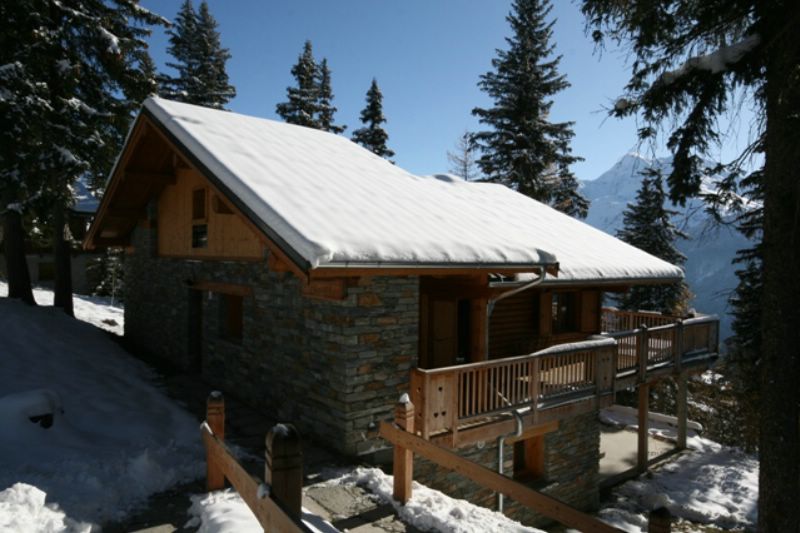
Begin by planning where you’ll stay. Choose a private chalet or apartment if you want to have privacy on Christmas morning, or a larger chalet or hotel if you’ll want to socialise. Catered chalets are a great option if you want a traditional Christmas dinner without all of the cooking and washing up, and many offer a whole host of extras such as champagne breakfasts and trees with all the decorations included in the price.
Think about dates carefully. Christmas day falls on a Saturday this year which is traditionally changeover day for many tour operators but check dates carefully as many are now running the Christmas week from Monday to Monday. Alternatively choose a tour operator who normally run Sunday to Sunday or pick a private chalet operator who will have more flexibility over arrival and departure dates.
Do your homework about the resort, and speak to everyone who you normally spend Christmas with before you book – you never know, they might like to come too. The vast majority of resorts offer Christmas events like visits from Santa, carol concerts, Christmas markets etc which means that there is plenty to do for non-skiers. Granny coming with you could be a win-win situation as she gets quality time with the kids, whilst you go up the hill!
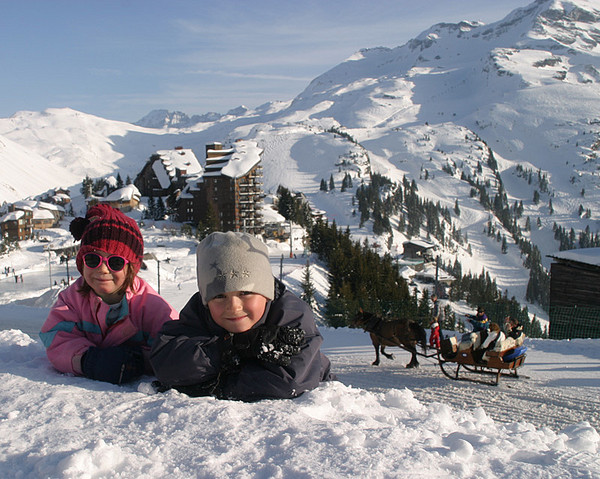
 Think carefully about what you are going to do on Christmas day before you go. If younger children are in crèche or ski school during the week, you might want to consider a family activity for Christmas day instead. You could book a husky ride or a snow shoe walk, have a snowman building competition or sledging races, or ski together as a family for the day.
Plan your present buying in advance too as there often isn’t a great selection of shops in resort. Pick small, packable items and wrap them up before you travel. Once in resort pick up one or two ski themed items to bulk out the pile – sledges go down a treat especially if you can let the kids use them straight away!
There are some great offers at the moment so shop around carefully before you book. If there is a group of you travelling, consider driving which cuts down on the flight costs and lets you pack a bit more. Or look for a Christmas deal to help reduce costs. So pour yourself a glass of vin chaud, bite into a mince pie, and enjoy the magic of an alpine chalet Christmas.
Thanks for the tips Heather! Ice and Fire are currently offering free lift passes for children at Christmas – so that's a great present for families!
-
My Top 3 Ski Resorts….by Steve Pangli, Powder N Shine
Our guest blog today comes from Steve Pangli, one half of Powder N Shine who run Chalet Flocon des Neiges in the Three Valleys. Steve and his partner Francesca have over twenty years ski experience between them. Here Steve gives us the lowdown on his favourite places to snowboard.
My Top 3 Ski Resorts
This is obviously not an easy choice, both because I have been to a number of ski resorts in Europe and North America, but equally, because there are of course hundreds of resorts I am yet to experience! Therefore, the views expressed are my own and unlikely to tally with anybody else’s opinion!!
That caveat out of the way, in reverse order, my three favourite ski resorts are as follows:
3. Mayrhofen, Austria
 My love of music was the key to my discovering this little Austrian gem. Mayrhofen makes my list as it is the venue for one of the most fun and different events in the music festival calendar, and certainly the biggest to combine winter sports with dance music, Snowbombing. Having wanted to go to this event for years, I eventually made it happen in 2008 and it was suitably unforgettable.
Initially a music festival for those seeking electronica and dirty bass, the festival evolves annually, attracting artists from across the musical spectrum, ranging in 2010 from Doves and Editors to Cuban Brothers, 2ManyDJs and Fatboy Slim. The 2011 line-up is just as strong and fortunately I have seen Prodigy live (Glastonbury ’09), otherwise I would be considering neglecting my chalet running responsibilities and heading over in April!
Partying at the top of the world is a unique experience and many thanks to Mayrhofen for making that happen for me and thousands of others.
2. Whistler/Blackcomb, Canada
 I am fortunate enough to have family not far from the resort in Vancouver, so I have ‘boarded in Whistler/Blackcomb a few times. My firefighter brother, who is also a snowboarding enthusiast (perhaps he needs to cool down in the snow after working hard in the traditionally timber-built city!) introduced me to the joys of Whistler in 2001.
For me what really differentiates the resort from European ski resorts is the incredible feeling of freedom. European resorts can be over-crowded with lengthy queues for lifts, whereas in Canada, I have hardly ever had to wait to jump on a chair. Add in the free guides that show you every explorable corner of the resort and overcrowding really becomes a thing of the past.
The other aspect of the resort that I found to be a real novelty was the evening ‘boarding. Having floodlights to illuminate the park was exceptional – and a rarity in my experience. OK, so maybe they need to provide evening entertainment as the après-ski isn’t as lively as in Europe, but with a group of friends, a nice log fire and a couple of smuggled bottles of Jägermeister, we were almost transported back across the pond!
1. Les Trois Vallées, France
 Not only the largest skiable area in the world, but now also my home. Lots of people who have skied in Europe know (or think they know!) the Three Valleys, but I stumbled upon a real find, deep in the heart of the area. The small, chalet-filled hamlet of Reberty Village so allured me that I have now started a business here. Off the beaten track and ski-in/ski-out at 2000m and with access to snow more or less guaranteed throughout the season in Val Thorens, beautiful tree-lined runs in the Meribel valley and more off-piste than you can throw a piste-basher at, this truly is the crème-de-la-crème of skiing destinations.
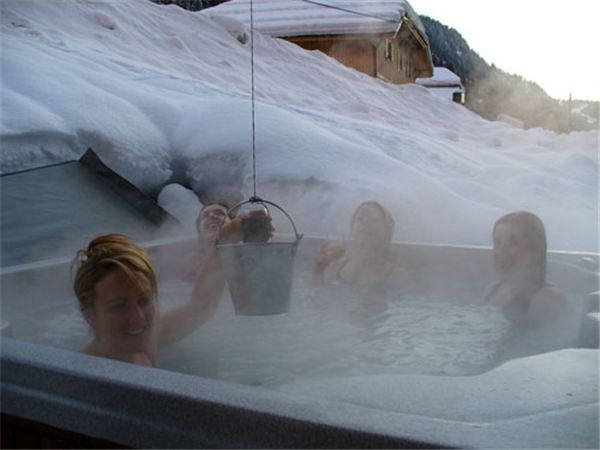
A relaxing hot-tub to ease away the day’s exertions, canapés, delicious dinner and wine and my list of what a skiing holiday should be is complete!
-
Top Tips from the Ski Gurus – Preparing for your Ski Holiday
It's already the beginning of October. Summer stuff is safely being stored away and anticipation for the winter is building. The first snow has already fallen in the Alps and many high altitude glacier resorts are now opening. Within a few weeks the ski shows will have rolled into the UK's major cities and rolled out again. It's hard not to love this time of year if you're a skier or boarder!
Many of you may be taking your first 2010-2011 ski holiday in a matter of weeks, and many more will be watching weather reports, looking out for availability and planning when to take your ski and snowboard trips.
We thought it would be a good idea to ask our Ski Gurus what kind of wintersports preparation people could be doing right now.
Q: What type of physical preparation should people be doing?
 Roddy Willis, Alpine Mojo:
If you are leading an active life and doing regular exercise (3-4 one hour sessions a week) and you are not planning on heading to the Olympics next winter then you you should be fit enough for your holiday skiing. However if you are expecting to perform like an Olympian on your next ski holiday but have a training regime consisting of ‘two pints of lager and a packet of crisps PLEASE’… then you should look to start your pre ski fitness program 6 – 8 weeks minimum before heading out to the mountains.You could head to your local gym and treat yourself to a personal trainer for a couple of hours, he or she will help you with a personally designed fitness program leading up to your holiday.
 Simon Halliwell, All Mountain Performance:
Running is great as an aerobic exerciser. Cycling is also good. Do some hills with interval training too if you can. Even regular brisk walking is something you can do which costs nothing.If you're not already exercising regularly then improving your aerobic fitness is a start – a session or two with a trainer would help you set realistic goals for yourself and give you something to work towards.
If you can get to the gym it'd be good to work the quads, ham-strings and glutes in particular, and to strengthen up the knee joints too. If you don't know what you're doing though always seek advice from a professional.
Q: What about beginners – do they need to be doing something in particular?
Roddy, AM:
Beginners need no real specific fitness skills – if you have sat in an office chair for the last 51 weeks then it might be a good idea to do some exercise before heading out to the mountains! Maybe start with walking or cycling for 30 minutes everyday for 4-6 weeks before your trip.It is amazing how many people new to skiing turn up at their 1st lesson, having arrived late in the resort the night before and then headed out for a few too many glasses of the finest local brew, a little out of shape, and then expect their bodies to perform! Yes it is very tempting and fun to start the après ski party before the skiing has even started but it is not the best way to start your love affair with skiing! And it will be a love affair!
Simon, AMP:
I often think this is more important to be fit than higher level skiers as you end up straining to get the skis to do what you want them to do.Without some muscle tone before, you could be aching for some time afterwards.
Q: What about balance exercises? Will this be useful for ski preparation? Eg using a fit ball, wobble board, cool board?
Roddy, AM:
Swiss balls to all that you might say!But ultimately skiing and snowboarding are about balancing on a small amount of metal edge whilst travelling at speed over unpredictable terrain.
So all off snow exercise that increases your ability to balance are great and will help your technique on and off the piste!
Q: Does core strength come into the equation?
Simon, AMP:
Very important. A lot of people don't even know this exists. Core strength means that the small "hidden" muscles are also strong, which means they will better be able to support the bigger muscle groups in thighs, calves, buttocks etc. A chain is only as strong as its weakest link, so if there is a big imbalance between muscles the weaker ones will suffer.Pilates and Yoga are good for this! Getting good instruction in Pilates or Yoga means you can practice easily at home. These kinds of activities will also improve flexibility.
Q: What about stretching – post workout stuff? Is this important?
Roddy, AM:
When we exercise we use our muscles – muscles work by contracting (shortening). If you spend the day using muscles you are constantly asking them to get shorter and at the end of the day they will tell you that they are shorter! However without stretching, your muscles will decide to stay short because you asked them to do that didn’t you!So at the end of the day take control of your muscles and stretch them out and let them relax they deserve a rest!
Simon, AMP:
Stretching is super important.I try to warm up again when I get home after skiing in order to do some stretching every night to avoid injuries. Don't stretch muscles cold – they need to be warm, so if you've spent the last 2 hours on apres ski a swift walk back to your chalet could help getting them warm again.
Food for thought! The important thing to remember is that skiing and snowboarding are physical activities performed at altitude. It's going to pose some physical challenges to your body if it's not used to it. You don't have to have tri-athlete fitness, but if your's is a sedentary lifestyle getting out and getting moving will increase your enjoyment and you'll certainly feel better for it!
-
What makes a great….Beginners’ Week
Are you hoping to take the plunge this year and have your first ever wintersports holiday? Take a look at this post from 2008 – great advice then and now ( even though we say so ourselves!)
Your first ever ski or snowboard holiday is an introduction to a sport that will keep you coming back for life. Wintersports holidays are fun, outdoor experiences which you can share with friends and family, you can meet new people, explore fabulous mountain landscapes and enjoy breathtaking scenery.
-
The Chalet Holiday – a peculiarly British institution
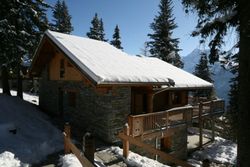 In the UK there are roughly 1.3 million people who take wintersports holidays each year and around 37% of them - a sizeable percentage – choose to stay in catered chalets. (Source: Ski Club of Great Britain)
 Ask a keen French, Dutch, American, Swiss or Austrian skier about what they think of chalet holidays and you'll be met with a blank look at best, sheer incredulity at worst. Why would you want to go on holiday and share your dinner table every night with a bunch of strangers, or sit and have pre and post dinner chats with them, have breakfast with them, maybe even share a bathroom with them?
The chalet holiday is a particularly British invention – and whilst other nationalities might dip their toe in the water to test it, it remains one of those curious British exports that we do best. So just what is it that makes the chalet holiday so popular and so unique?
Personal Services:
The chalet holiday first appeared in the 60's when enterprising Brits would rent a chalet for a week or two, install the daughter of one of their business associates in the city to cook and clean, and invite their friends over. It was an extension of the shooting weekend, when the gentry would congregate at country houses to shoot wildlife and chat over dinner.
As the idea took hold and developed throughout the 70's and 80's it remained largely an upper class concept – chalet girls were often keen skiers just out of Cheltenham Ladies College or Roedean. These Camillas, Lucindas and Samanthas didn't need to be paid much more than pocket money and their ski season would arm them with important skills for later life when hosting dinner parties for their stockbroker, lawyer or banker husband.
They would happily cook, serve and pour the wine whilst charming and chatting with their guests, probably collecting a few marriage proposals as well as tips along the way.
Since those days the chalet holiday has become mainstream – your chalet host is just as likely to be called Stacey as Samantha, or even Gavin - but the idea of the charming chalet host lives on. They will make your bed, pour your wine, serve you wonderful gourmet food on a budget, and help smooth the way for you as you get your feet.
It's the personal touch – you'll be sharing your chalet with just a few other guests – so you will get to know your chalet host and he or she will be able to tell you where's best for apres-ski drinks, where to ski on the first day, how to get to the lifts, the best way to get back to the chalet – and all those little tips which might take you a couple of days to work out otherwise.
The services offered are often extended nowadays to include ski guiding, packed lunches, English newspapers, a lift to ski lifts. In many cases you can pick and choose the level of service you want.
Food:
At the heart of the chalet experience is the food. There's no need to traipse round a supermarket buying basics or going to a cafe everytime you want a coffee. English tea is on tap.
Cooked breakfasts, afternoon tea and cakes, good homemade meals – this is what you'll find in a chalet holiday and what gets people coming back for more.
What's not to like? Many chalet companies will take pains to get English ingredients too – mincemeat for mince pies, Marmite, bacon and more. Part of the experience is also the "mucking in" – earn points with your chalet host by stacking the plates and helping out a little.
As the chalet holiday has evolved so has the catering on offer. Chalet food can range from gourmet to hearty and wholesome. However it will always be freshly prepared. As every chalet company worth their salt knows their reputation hangs on the talents of their hosts.
Social Interaction:
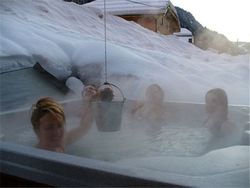 Another key ingredient of a chalet holiday is the way that it throws you together with people you have never met and by the end of the week you could be ski buddies or more for life.
Whilst it's certainly not unusual for a group of friends to take their own chalet, you can always book a room in a chalet for you and your partner and see what happens. On the first evening there will be a little awkwardness as you meet your fellow guests at the dinner table for the first time. As the week pans out the awkwardness will gradually disappear. It could be replaced by much joviality as you gradually get to know your fellow guests. You're all bound together by the ski experience – so it's an easy way to open up a conversation.
Of course it's not guaranteed that your fellow guests will be the kind of people you'd invite to your home – but in a way that's also part of the charm of the chalet holiday. The pot luck - will it be life-changing, will you hate them all, or will it just be a little dull? This is all part of the experience.
So if you have yet to try a chalet holiday we can certainly recommend it – convenient, comfortable, personal and fun!
Have you had a chalet holiday? Why not let us know your opinions or experience. Leave us a comment or contact us at info@chaletsdirect.com .
-
Eurostar tickets for the Alps now on sale!
 Let the train take the strain this winter! Tickets for the popular Eurostar service from London to the French Alps have gone on sale today.
 The service starts on 19th December through to 16th April and will take you direct from St Pancras or London Ashford to Moutiers, Aime or Bourg St Maurice – meaning that the Three Valleys, Paradiski and Espace Killy resorts are just a short transfer from your arrival station.
Mary Walsh, Eurostar’s Director of Communications, commented: "As well as our popular French ski destinations, tickets for resorts in Switzerland will be available later in the year thanks to onward connections in Paris. More and more of our passengers are discovering the ease and convenience of onward travel thanks to Europe’s high speed rail network.”
If you've not tried the train before it is certainly an interesting option. Leaving London at 10am on a Saturday you'll be in the heart of the Alps by 7pm. Along the way you can enjoy fantastic scenery and relax. There is also a night train, which means you can leave work on Friday evening and be on the slopes on Saturday morning. Prices start at £149 for a return ticket – for full details and booking take a look at eurostar.com
And don't forget that Easyjet and other low cost airlines are already selling seats for this winter – with very low prices for early bookers. Whilst we may have been basking in a heatwave recently, it's not too early to start planning your next ski trip!
-
More snow!
Half term week in Europe is going out with a bang – as many resorts from west to east and north to south are getting some heavy snowfalls today and tomorrow. Alpe d'Huez is getting lots of snow as we write – take a look at the webcam - and snow will be spreading from France to Switzerland and Austria.
So whilst skiing out there today might not be the best, the fresh snow is a gift for everyone heading out tomorrow! Conditions now are excellent so why not escape the February greyness in the UK for the great outdoors, some fresh air and gluhwein.
We'll be publishing our next newsletter sometime next week with lots of juicy holiday ideas for the rest of the season – so watch this space.
If you'd like to make sure you get a copy make sure you sign up on our Promotions page.
-
Great snow for half term ski holidays
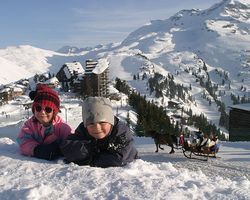 This weekend sees the biggest exodus for the ski slopes since the Christmas/New Year holidays. February half term is upon us already, and resorts across the Alps and Pyrenees will be gearing up.
Fortunately a cold and snowy January means that conditions are now excellent, with many resorts receiving a hefty snow top up as recently as last weekend, and smaller showers during this week. So if you're heading to the mountains for a family half term you can expect good snow, cold temperatures at the start of the week, and the possibility of more snowfall towards the end of it. Take a look at Netweather for a detailed weather forecast for your resort.
As next week coincides with Mardi Gras you may also find a carnival atmosphere in town with some fun events taking place during your stay.
If you haven't booked anything but have made a last minute decision to find a ski holiday take a look at our Promotions page and do a search by date – there are some last minute cancellations so there are a few beds available.
The February holiday weeks are the turning point in the season – and by the end of the month the days are getting longer, temperatures are rising, and spring is in the air. Keep an eye out for some excellent March offers we'll be posting - why not subscribe to our Latest and Greatest newsletter to get the greatest offers direct to your inbox.
-
All Mountain Performance / Basic tips for carving turns

THIS MONTHS SKI TIPS. Carving turns
What is carving ?
Carving is a form of ski turn that is non skiddy, ie using the shape of the skis and only two of the three steering elements (pressure, edging and not using rotation). If correctly applied, the skis will cut through the snow smoothly tracking around an arc.


How to carve and initiate the turn:
Start skiing in a straight line on a suitably flattish piste with your feet at hip width apart. Without turning your feet, tilt both your skis in the direction you wish to turn. At the same time stretch your outside leg to push the ski against the snow. Feel the skis grip and allow time for the skis to start carving.


How to hold the carve: Resist the desire to rotate your legs and feet. let the pressure build up. As the pressure increases in the arc, you can increase the amount of edge tilt to tighten the carve.

How to finish the turn: When you feel the turn is complete, simply release the pressure built up in the turn by softening the outside leg, this will allow the feet to come naturally back underneath the body.


How to transfer to the initiation of the next turn: With a stretch down into the snow of the new outside leg, resist the new temptation to turn your feet and skis, using the tilting motion and stretch of the leg to create more pressure on the outside ski – so repeating the process used in the turn before.
Linking clean carving turns is a great sensation, it's fast but feels stable. We hope you enjoy the tips.
Mark Gear and Simon Halliwell ( BASI level 4 ISTD) All Mountain Performance Chamonix

-
Glacier skiing in safety
Glacier Skiing Safety (full audio version) from Simon Christy on Vimeo.
The legendary Vallee Blanche in Chamonix attracts thousands of skiers every year. Starting high up in the Mont Blanc massif, with it's famous entry point at the top of Aiguille du Midi lift station, this famous off piste run is a mecca for strong intermediate and expert skiers. It is a 20km run which takes you through the largest glaciated domain in the Alps with a vertical descent of 2700m. It is a real opportunity to experience a high mountain environment away from the crowds, and one of those truly once in a lifetime experiences.
Glacier skiing is not without risk however. Chamonix-based mountain guide, Andy Perkins, and ski instructor, Simon Christy, have put together a 6 minute video aiming to inform skiers and snowboarders of the basic principles and what to remember when skiing on glaciers.
The video was filmed last winter on the Vallee Blanche and produced with the co-operation of the Chamonix lift pass company, the Compagnie du Mont Blanc. The video is being screened all winter at the Aiguille du Midi and the Grands Montets.
We think it's a great film, and we would like to urge anyone who is considering venturing into high mountain glacial terrain to book a local mountain guide – taking an expert with you is never a bad idea.